Hrotsvitha is a saint of the Catholic Church.
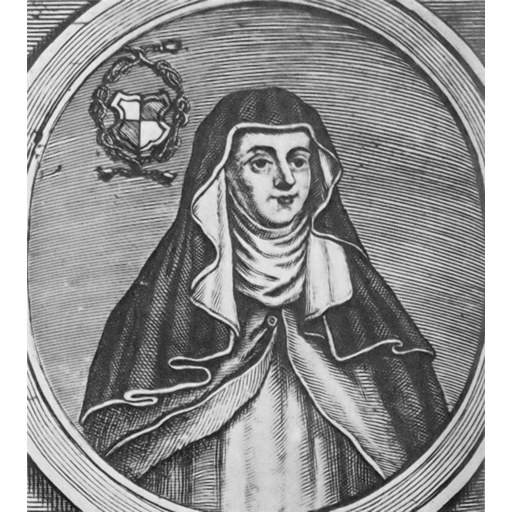
License: Public domain
Hrotsvitha
Saint- Gender
- female
- Church
- Catholic
Places
Roles & Family
Religious Information
Biography
Hrotsvitha of Gandersheim (also spelled Hrotsvit, Hroswitha, Roswitha, and in Latin Hrotsvit or Hrosvitha) was a tenth-century Saxon canoness, poet, and dramatist. She is generally recognized as the first known female playwright of the Latin Middle Ages and as the earliest named German woman of letters whose works survive. She came of a noble Saxon family and passed her adult life as a secular canoness at the Imperial Abbey of Gandersheim in East Saxony, in what is now Lower Saxony, Germany. Gandersheim was a house of aristocratic women who lived in community under an abbess, retained personal property, and did not take the solemn vows of enclosed nuns; the abbey stood under royal protection and was closely linked to the Liudolfing or Ottonian dynasty. Almost nothing can be established about her childhood or the exact places and dates of her birth and death. Her own writings place her literary work in the second half of the tenth century, under Otto I and in the early years of Otto II.
She was educated in Latin grammar, scripture, and the liberal arts at Gandersheim, above all under Abbess Gerberga II, daughter of Duke Henry of Bavaria and niece of Emperor Otto I, who became abbess in the 950s. Hrotsvitha named Gerberga as her teacher and the encourager of her historical poems. In the prefaces that introduce her collections she adopted the conventional pose of a frail, unlearned woman writing only by divine help, yet she also styled herself Clamor Validus Gandeshemensis, the strong voice of Gandersheim, a learned etymology of her Old Saxon name. She composed exclusively in Latin, using dactylic hexameters, elegiac couplets, and a distinctive rhymed prose for the plays. Her models included the Bible, late antique hagiography, Prudentius, and, for drama, the comedies of Terence, whose elegant style she admired but whose pagan subject matter she intended to supplant with Christian stories of virgins, martyrs, and converts.
Her oeuvre is arranged in three books. The first gathers eight legends in verse: poems on the Virgin Mary and the Ascension of Christ, and on Saints Gongolf, Pelagius of Cordoba (a contemporary Cordoban martyr whose cult had reached Saxony), Theophilus the penitent, Basil, Dionysius of Paris, and Agnes. The second book contains six dramas in rhymed prose—Gallicanus, Dulcitius, Callimachus, Abraham, Paphnutius, and Sapientia—which are the earliest extant dramas of medieval Europe and the first theatrical works known to have been written by a woman since antiquity. They dramatize the conversion of pagan soldiers, the comic frustration of a persecutor who embraces kitchen pots instead of holy virgins, the resurrection of a young woman who died defending her chastity, and the repentance of harlots under the guidance of desert monks, as well as the martyrdom of Wisdom and her daughters Faith, Hope, and Charity. Throughout, Hrotsvitha celebrates female constancy and the victory of Christian purity over worldly power. The third book consists of two historical epics: the Gesta Ottonis, a verse account of Otto I written at Gerberga’s urging, and the Primordia coenobii Gandeshemensis, which narrates the ninth-century foundation of Gandersheim by Count Liudolf and his wife Oda and traces the abbey’s early abbesses.
The plays and poems survived in a single principal manuscript, later at the monastery of St. Emmeram in Regensburg, where the German humanist Conrad Celtis found them in the 1490s and printed the dramas at Nuremberg in 1501. That edition established her modern fame among humanists and, much later, among historians of women’s writing and of medieval theatre. Hrotsvitha was never formally beatified or canonized, and no medieval liturgical cult or universally recognized feast day is attested. Her significance is literary and cultural: she attests to the Latin learning of Ottonian women’s communities, to the self-conscious authorship of a noble canoness, and to an original Christian recasting of classical comedy. The year of her death is unknown. She was still at work about 973, the approximate date of the Primordia, and is generally thought to have died at Gandersheim at some point thereafter.