Ignacia del Espíritu Santo is a venerable of the Catholic Church (1663 - 1748). Ignacia del Espíritu Santo's feast day is celebrated on 10 September.
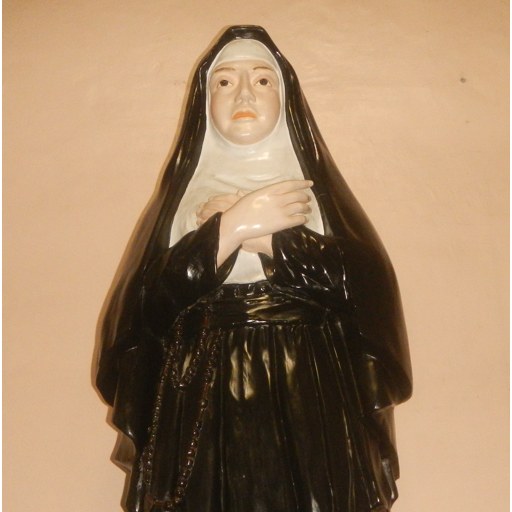
User:Judgefloro
License: CC0
Ignacia del Espíritu Santo
Venerable- Life Span
- 1663 - 1748 (age 85)
- Feast Day
- 10 September
- Gender
- female
- Church
- Catholic
Places
Roles & Family
Religious Information
Biography
Ignacia del Espíritu Santo, commonly known as Mother Ignacia, was a Filipina religious foundress of Chinese-Filipino ancestry, born in 1663 in Binondo, Manila, in the Spanish colonial Philippines. Her father, Jusepe Iuco (also rendered Yuco), was a Chinese immigrant from Amoy who had converted to Catholicism; her mother, María Jerónima, was a native Filipina. She grew up in the mixed Chinese and Tagalog Catholic milieu of Binondo and the nearby Parián in late seventeenth-century Manila. In her early twenties she sought a consecrated life, but the Spanish-founded convents of colonial Manila generally admitted only women of Spanish blood, so a conventional cloistered vocation was closed to her as a mestiza de sangley. Under the spiritual direction of the Jesuit Paul Klein (Pablo Clain), she made the Spiritual Exercises and determined to live in poverty, prayer, and penance outside those existing houses.
Leaving her family home, she gathered other native and mestiza women who wished to live as beatas under Jesuit guidance. The community, known as the Beaterio de la Compañía de Jesús, occupied modest houses near the Jesuit establishments in Manila and combined a regular life of prayer with manual work—sewing, embroidery, and similar labor—rather than depending on large endowments. The beatas also helped with retreats for laywomen, an apostolate tied to Jesuit spirituality, and took part in the Christian education of girls. Ignacia served for many years as superior, forming her companions in humility, obedience, and interior prayer. In the early eighteenth century the community obtained a measure of local ecclesiastical recognition for its manner of life, though it remained a beaterio rather than a fully erected religious institute in the later canonical sense.
In later life she resigned the office of superior and lived as an ordinary member of the house she had founded. She died in Manila in 1748 at an advanced age, after receiving the sacraments. The beaterio outlasted the expulsion of the Jesuits from the Spanish empire and the political and ecclesiastical changes of the nineteenth century. In the early twentieth century it was reorganized and received pontifical approval as the Congregation of the Religious of the Virgin Mary, the first indigenous Filipino congregation of women to obtain that status. Mother Ignacia is therefore remembered as a pioneer of native Filipino women’s religious life in the colonial period.
A cause for her beatification was introduced in the twentieth century. After examination of her life and virtues, Pope Benedict XVI authorized the decree of heroic virtue, and she was declared Venerable on 6 July 2007. She has not been beatified or canonized. Her memory is kept especially by the Religious of the Virgin Mary and by the Church in the Philippines, where she is honored as a foundress who opened a path for Filipino women to consecrated life and as a figure of holiness from the Spanish colonial era.