Illtud is a saint of the Catholic Church. Illtud's feast day is celebrated on 6 November. Illtud is the patron saint of Llantwit Major.
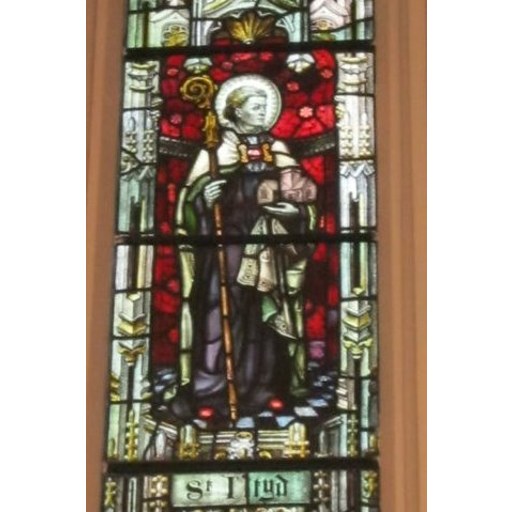
Gwenddwr
License: CC BY-SA 3.0
Illtud
Saint- Feast Day
- 6 November
- Gender
- male
- Church
- Catholic
Places
Roles & Family
Patronage
Llantwit Major
Biography
Illtud (also Illtyd; Latin Iltutus) was a monk, abbot, and teacher of the British church in southeast Wales in the late fifth and sixth centuries. He is the founding figure associated with the monastery of Llanilltud Fawr, known in English as Llantwit Major, in the Vale of Glamorgan, later remembered as one of the principal monastic schools of early medieval Wales. Strictly contemporary evidence for his life does not survive. The earliest important literary witness is the Life of Saint Samson of Dol, a Breton hagiographical work commonly dated to the seventh century, which presents Illtud as Samson’s teacher and describes him as the most learned of the Britons in the Old and New Testaments and in philosophy, poetry, rhetoric, grammar, and arithmetic. That early reputation as a scholar-abbot is the most secure element in his historical profile.
A much fuller biography appears in the twelfth-century Vita Sancti Iltuti, preserved among the Latin lives of Welsh saints. According to that text, Illtud was born in Brittany to a prince named Bicanus and to Rieingulid, a daughter of the British ruler Anblaud, and was a kinsman of King Arthur. The Life makes him a soldier at court, married to a woman named Trynihid, and converted to religion after a miraculous warning connected with a hunt, in some versions involving Saint Cadoc. He is then said to have founded or restored the community at Llanilltud Fawr and to have worked numerous miracles. These genealogical, Arthurian, and conversion stories follow the conventions of high medieval Welsh hagiography and are not corroborated by earlier sources; they should not be treated as verified fact. What can be confirmed independently is the strength of his cult. Place-names including Llanilltud Fawr, Llanilltud Faerdref (Llantwit Fardre), and Llanilltud Gwyr, together with material in the Book of Llandaff, show that he was widely commemorated in Glamorgan and neighbouring districts.
Medieval writers credited Illtud’s school with educating a generation of saints, among them Samson of Dol, Gildas, Paul Aurelian, and, in more ambitious lists, David of Wales and Maglorius. Of these names, only the connection with Samson rests on relatively early hagiography. A related legend identified the monastery with Cor Tewdws, supposedly a Roman college of Theodosius destroyed by Irish raiders and restored by Illtud; that story is not historically reliable. Early medieval inscribed stones at Llantwit Major and the long continuity of the church there are consistent with an important ecclesiastical centre, but they do not independently document the saint’s personal career. Later versions of the legend also send him to Brittany before a return to his own monastery.
No authentic year of birth or of death has been preserved, and dates sometimes offered in older reference works are conjectural. Tradition holds that he died and was buried at Llanilltud Fawr. His feast is observed on 6 November. He was venerated in the Welsh and Breton churches long before the age of papal canonization processes, and no individual pope is recorded as having canonized or beatified him. He is the patron of Llantwit Major, where the parish church of Saint Illtud stands on the site linked to his community. Illtud’s lasting historical importance lies in the early testimony to his learning, in the role of Llanilltud Fawr in the memory of the Welsh church, and in a regional cult that is far better attested than the details of his life.