Inés de Benigànim is a venerable of the Catholic Church (1625 - 1696). Inés de Benigànim's feast day is celebrated on 21 January. Inés de Benigànim is the patron saint of Benigànim.
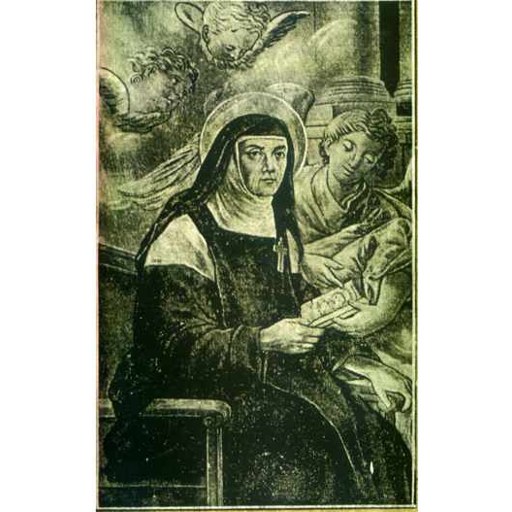
Unknown, Spanish
License: Public domain
Inés de Benigànim
Venerable- Life Span
- 1625 - 1696 (age 71)
- Feast Day
- 21 January
- Gender
- female
- Church
- Catholic
Places
Roles & Family
Religious Information
Patronage
Benigànim
Canonization
Biography
Josefa Albiñana, known in religion as Josefa María de Santa Inés and popularly as Inés de Benigànim, was born on 9 February 1625 in the town of Benigànim in the Kingdom of Valencia, then under the Spanish Crown. She was the daughter of a modest local family; sources commonly name her parents as Lluís Albiñana and Vicenta Iñigo, though some accounts give the maternal surname as Gomar. Baptized on the day of her birth, she grew up in the devout Catholic world of seventeenth-century rural Valencia. Her mother died while she was still young, and the girl was placed in domestic service. Even in childhood she was noted for piety, a simple manner, and a desire for religious life, though poverty and family circumstances delayed her entrance into a convent.
In 1643 she entered the monastery of Discalced Augustinian (Augustinian Recollect) nuns in her native Benigànim, a community dedicated to the Blessed Sacrament. She received the habit and took the religious name Josefa María de Santa Inés, in honor of Saint Agnes. She made her solemn profession in the mid-1640s and remained in that same house for the rest of her life. The convent followed a strict recollect observance of the Rule of Saint Augustine, marked by enclosure, poverty, and contemplative prayer. Sister Josefa María occupied humble offices in the community and was never elected to positions of government. She was largely unlettered, a fact that later hagiographers presented as part of her holy simplicity.
Throughout more than five decades of religious life she acquired a wide reputation for mystical gifts, including visions, prophecy, and miracles of healing. People of every rank, from local peasants to officials of the Kingdom of Valencia and even members of the Spanish court, sought her intercession and counsel. She was devoted to the Eucharist and to the Passion of Christ, and she was said to have experienced frequent ecstasies. Contemporary witnesses described her as childlike in speech and behavior, often using the Valencian vernacular, and as extraordinarily obedient and humble. She accepted ridicule and misunderstanding as a form of spiritual poverty. Despite chronic poor health in later years, she maintained the regular observance until shortly before her death.
Inés de Benigànim died in her convent on 21 January 1696. Veneration began immediately; her tomb in the monastery church became a place of local pilgrimage. An ordinary diocesan process was opened in the early eighteenth century, and her cause advanced slowly through the Roman Congregation of Rites. Pope Leo XIII beatified her on 26 February 1888. She has not been canonized and remains a Blessed of the Catholic Church. Her feast is kept on 21 January, the anniversary of her death. She is honored as patron of Benigànim, and her relics continue to be venerated in the church of the Augustinian Recollect nuns of that town. In Augustinian and Valencian Catholic tradition her life is presented as an example of contemplative humility and of holiness found in apparent simplicity.