Innocenty is a saint of the Eastern Orthodox Church (d. 1731). Innocenty's feast day is celebrated on 26 November. Innocenty is the patron saint of Irkutsk;Siberia.
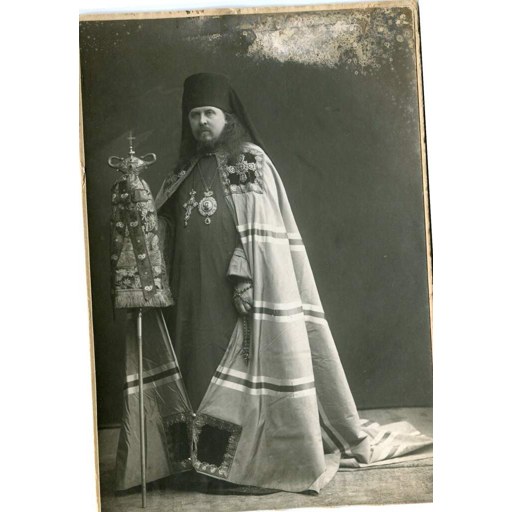
Unknown authorUnknown author
License: CC BY 4.0
Innocenty
Saint- Life Span
- d. 1731
- Feast Day
- 26 November
- Gender
- male
- Church
- Eastern Orthodox
Places
Roles & Family
Patronage
Irkutsk;Siberia
Canonization
Biography
Saint Innocent of Irkutsk (Innokenty; in the world Ioann Kulchitsky) was an eighteenth-century Russian Orthodox monk-bishop, the first hierarch of the newly created see of Irkutsk and Nerchinsk, and is venerated as a missionary saint of Siberia. Traditional hagiography places his birth around 1680 in a family of lesser nobility or clergy connected with the Chernigov region of Left-bank Ukraine, then within the Cossack Hetmanate; the surname has also led some researchers to associate him with the Kulchytsky family of Galicia. Exact place and year of birth are not firmly documented. He studied at the Kiev Mohyla Academy, the principal Orthodox school of the period, and was tonsured a monk with the name Innocent at the Kiev Caves Lavra. He taught rhetoric and related subjects and later served in Moscow at the Slavic-Greek-Latin Academy as instructor and prefect, acquiring a reputation for learning.
In 1721 he was consecrated a bishop, with the title of Pereyaslav, and assigned to head the Russian ecclesiastical mission to Beijing, intended to serve the Albazinian community there and to pursue missionary work under Qing rule. Chinese authorities would not admit a bishop, and Innocent was left waiting for years in eastern Siberia, at Selenginsk and Irkutsk, in poverty and uncertainty. In 1727 an independent diocese of Irkutsk and Nerchinsk was established, and he became its first bishop. Over a short episcopate of about four years he sought to organize parish life across a vast territory, improve the education and conduct of the clergy, open schools, and preach among Russian settlers and indigenous peoples, including Buryats. Accounts describe an austere personal life, almsgiving, and endurance of the Siberian climate and isolation.
He died in Irkutsk on 27 November 1731 and was buried at the city’s Ascension Monastery. In 1764, during building work, his remains were reported incorrupt, and stories of miracles circulated. The Russian Orthodox Church glorified him in 1804. His principal feast is 26 November (Julian calendar), with further commemorations for the uncovering and translation of the relics and in the synaxis of Siberian saints. The relics were seized in the Soviet period, kept in an anti-religious museum, and returned to the Church in 1990; they are again venerated in Irkutsk. He is honored as a heavenly patron of the Irkutsk region and of Russian missionary work in Siberia.