Iosif Mărturisitorul is a saint of the Catholic Church. Iosif Mărturisitorul's feast day is celebrated on 24 April.
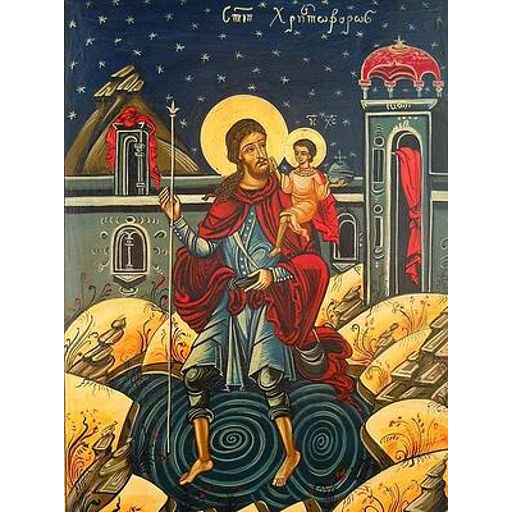
https://fineartamerica.com/art/paintings/romanian+icons
License: unknown
Iosif Mărturisitorul
Saint- Feast Day
- 24 April
- Gender
- male
- Church
- Catholic
Roles & Family
Canonization
Biography
Saint Joseph the Confessor (Romanian: Sfântul Ierarh Iosif Mărturisitorul) was an Orthodox bishop of Maramureș who lived in the late seventeenth and early eighteenth centuries. He is venerated in the Romanian Orthodox Church as a confessor of the faith—mărturisitor, one who suffered for Orthodoxy without necessarily dying a violent martyr’s death—because he refused to accept the union of Transylvanian and Maramureș Romanian Christians with the Church of Rome. Surviving sources do not preserve a verified year or place of birth, nor a fully documented civil name; he is understood to have been a native of the Maramureș region, then a borderland under shifting Transylvanian, Hungarian, Ottoman, and finally Habsburg authority. Precise biographical data for clergy of this rank and period in Maramureș are scarce, and later hagiography must be used with caution.
Joseph entered monastic life, as was required for episcopal candidates in the Eastern Orthodox tradition, and was later chosen to head the Orthodox diocese of Maramureș. He received episcopal consecration in Wallachia (Țara Românească), south of the Carpathians, because the Orthodox hierarchy in Transylvania and Maramureș was under severe constraint from Calvinist princes and, after the Habsburg takeover of Transylvania in the 1680s–1690s, from Catholic imperial policy. As bishop he sought to maintain Orthodox clergy, liturgical life, and church order among the Romanian population of Maramureș at a time when that population had little political protection. Maramureș occupied a somewhat distinct position relative to the rest of Transylvania, but it was not spared the confessional pressures of the age.
After the synods associated with Alba Iulia in 1697–1700, many Transylvanian Orthodox clergy were pressed into the Union with Rome while retaining the Byzantine rite, the origin of the Romanian Greek-Catholic Church. Joseph did not accept this union and continued to act as an Orthodox bishop. For that refusal he suffered arrest, imprisonment, and other hardships at the hands of the new civil and ecclesiastical authorities. Traditional church accounts associate his confession of faith with confinement in the region (sometimes linked with the castle at Huszt/Khust), though the documentary record is thin and dates are not independently fixed. He was a diocesan bishop, not a patriarch or pope.
Later Romanian Orthodox tradition places his death in the early eighteenth century; a year of 1711 appears in church commemorations but is not treated here as a verified historical date. His burial place is not securely known. In 1992 the Holy Synod of the Romanian Orthodox Church glorified him as a saint together with other Transylvanian Orthodox hierarchs and confessors of the seventeenth century, notably Ilie Iorest and Sava Brancovici, who had likewise suffered for refusing Calvinist or Catholic impositions. He is commemorated on 24 April. He remains a regional figure of Orthodox memory in Maramureș rather than a saint with a widely attested list of patronages; many details of his life, family, and death still cannot be confirmed from independent historical sources.