Isabella Jagiellon is a saint of the Catholic Church (1519 - 1559).
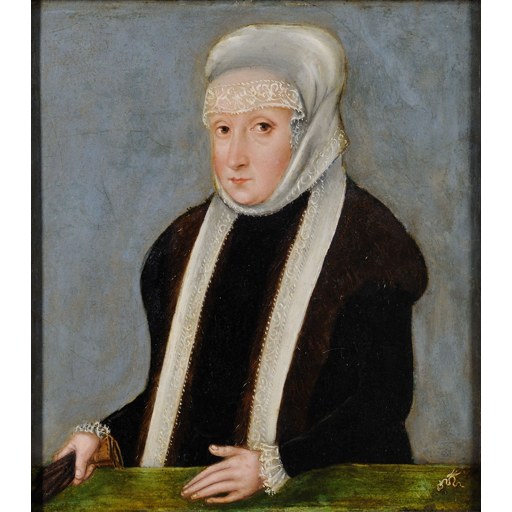
Workshop of Lucas Cranach the Younger
License: Public domain
Isabella Jagiellon
Saint- Life Span
- 1519 - 1559 (age 40)
- Gender
- female
- Church
- Catholic
Places
Relics & Where to Venerate
Location unknown
The bodily remains of Isabella Jagiellon are a first-class relic. Venerated at St. Michael's Cathedral.
Roles & Family
Religious Information
Biography
Isabella Jagiellon was born in 1519 in Kraków, the eldest daughter of King Sigismund I of Poland and his second wife, Bona Sforza, a Milanese princess of the Sforza house. Through her father she belonged to the Jagiellonian dynasty that ruled Poland and Lithuania and had earlier occupied the thrones of Hungary and Bohemia; through her mother she was tied to Italian princely and Neapolitan Aragonese circles. She grew up at a Renaissance court shaped by humanist education and by Bona’s political and cultural influence. Her siblings included Sigismund II Augustus, later king of Poland, and the princesses Sophia, Anna, and Catherine, who married into leading Central and Northern European dynasties.
In 1539 she was married to John Zápolya, who since the disaster of Mohács in 1526 had claimed the Hungarian crown against Ferdinand of Habsburg. The marriage was meant to bind Poland to Zápolya’s kingship and to restore a Jagiellonian interest in Hungary. Isabella became queen consort of Hungary. The union was short. In 1540 she bore a son, John Sigismund, and her husband died within weeks of the birth. An earlier compact had contemplated Habsburg succession if Zápolya died without a male heir; the child’s birth therefore reopened the struggle for the Hungarian throne and placed the young widow at the center of a three-sided contest among her own party, the Habsburgs, and the Ottoman Empire.
As queen dowager and guardian of an infant king, Isabella tried to hold the eastern lands of the realm. She accepted the protection of Sultan Suleiman, who in 1541 occupied Buda and assigned Transylvania and neighboring territories to Isabella and her son as a tributary principality. Effective power was shared, and often disputed, with George Martinuzzi, the Pauline monk who served as governor and treasurer. Conflict with Martinuzzi and pressure from Ferdinand led in 1551 to her abdication. She left Transylvania with her son for Poland, while the country was made over to the Habsburgs. Martinuzzi was soon assassinated, and Habsburg authority in the east proved fragile.
In 1556 the Transylvanian estates recalled Isabella and John Sigismund. She returned and again acted as regent from Gyulafehérvár (Alba Iulia), seeking to restore her son’s position, to manage Ottoman suzerainty and relations with neighboring powers, and to maintain a court marked by Polish and Italian connections. Transylvania was already a land of mixed Catholic, Lutheran, and Reformed allegiance; Isabella herself remained Catholic. She died at Alba Iulia in 1559 and was buried in the Cathedral of St. Michael. Her son continued as ruler of Transylvania and as a claimant to the Hungarian royal title until his death without issue in 1571.