Isidoro Zorzano is a venerable of the Catholic Church (1902 - 1943).
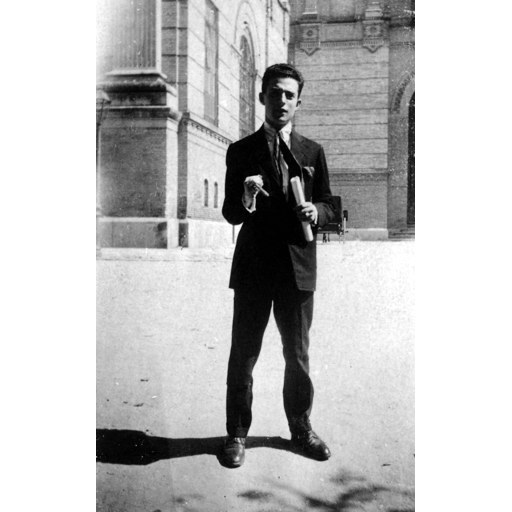
Oficina para la Causa de los Santos. Prelatura del Opus Dei
License: CC BY-SA 2.0
Isidoro Zorzano
Venerable- Life Span
- 1902 - 1943 (age 41)
- Gender
- male
- Church
- Catholic
Places
Roles & Family
Biography
Isidoro Zorzano Ledesma was born on 13 September 1902 in Buenos Aires, Argentina, the son of Tomás Zorzano and María Ramona Ledesma, Spaniards who had emigrated from the Rioja. In 1905 the family returned to Spain and settled in Logroño, where he spent his childhood and adolescence. He attended the Instituto General y Técnico de Logroño and there became a close friend of Josemaría Escrivá, who was born in the same year. After secondary studies he moved to Madrid to train as an industrial engineer at the Escuela Especial de Ingenieros Industriales, receiving his degree in 1927.
Following graduation he took up professional work with the Compañía de Ferrocarriles Andaluces, based for a time in Málaga, and later held other engineering posts connected with railways and industry in Spain. Those who worked with him remembered a competent, even-tempered professional who took his duties seriously and treated colleagues and subordinates with fairness and kindness. He did not abandon secular work after discovering a religious vocation; rather, he came to see ordinary professional life as the setting in which he was called to holiness.
In 1930 Zorzano asked to join Opus Dei, the foundation begun by his friend Josemaría Escrivá in Madrid in 1928, and he became one of its first members, living as a celibate layman (a numerary) while continuing his engineering career. He took part in the early apostolic work of that path in the Church, including support for the first student residences and formation activities in Madrid. Throughout the 1930s he combined demanding professional responsibilities with a discreet life of prayer, apostolate, and service to the small group of people who were beginning to follow Escrivá’s message of sanctifying ordinary work.
During the Spanish Civil War of 1936–1939, Zorzano remained in Madrid, which was under Republican control and where the Church suffered severe persecution. Because he had been born in Argentina he retained Argentine citizenship and a foreign passport, which afforded him a measure of protection and freedom of movement that many Spaniards lacked. He used that position to help priests, religious, and members of Opus Dei who were in hiding, bringing them food and news, arranging hiding places, and making it possible for them to receive the sacraments. Contemporary accounts describe him as calm, practical, and generous in a time of great danger.
In the early 1940s he developed a malignant lymphoma. He accepted a long and painful illness without complaint, continued to work and to look after others as long as he was able, and died in Madrid on 15 July 1943, not yet forty-one years old. He was the first member of Opus Dei to die. A reputation for holiness persisted among those who had known him, and a cause of canonization was eventually introduced. Pope Francis authorized the decree of heroic virtues on 21 December 2016, declaring him Venerable. He has not been beatified or canonized, and no official feast day or patronage has been assigned.