Isnardo da Chiampo is a venerable of the Catholic Church (d. 1244). Isnardo da Chiampo's feast day is celebrated on 22 March.
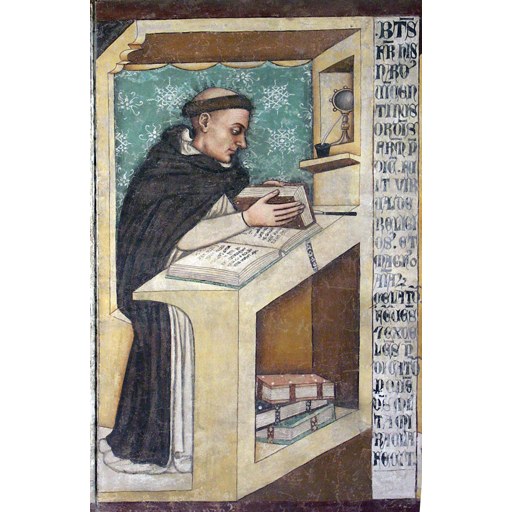
Risorto Celebrano
License: CC BY-SA 3.0
Isnardo da Chiampo
Venerable- Life Span
- d. 1244
- Feast Day
- 22 March
- Gender
- male
- Church
- Catholic
Places
Roles & Family
Religious Information
Canonization
Biography
Isnardo da Chiampo, also known in Latin as Isnardus and in some modern languages as Isnard of Chiampo or Isnard of Vicenza, was a thirteenth-century Italian priest of the Order of Preachers. He was born at Chiampo, in the diocese of Vicenza in northern Italy; no contemporary source records the year of his birth, and it should not be inferred from the date of his later ministry. He entered the Dominican Order in the first generations after its foundation, when the friars were spreading through the communes of Lombardy and the Veneto. Later hagiographical tradition asserts that he received the habit from Saint Dominic himself, perhaps at Bologna, but that claim is not confirmed by strictly contemporary documents and may reflect a pious desire to link an early local preacher with the founder.
His documented activity belongs to Pavia in Lombardy, where he served as a preacher and as prior of the Dominican convent attached to the church of San Tommaso. The Order of Preachers had been established to combat heresy by learned preaching and to provide orthodox instruction in the cities; northern Italy in the early thirteenth century was a principal field of that work. Isnardo was remembered for eloquence in the pulpit and for a reputation of personal austerity and holiness. Surviving notices do not show him as a bishop, inquisitor of record, or author of treatises, nor as a participant in the high politics of the age of Ezzelino da Romano. His importance in the sources is that of a conventual prior and popular preacher whose memory was kept at Pavia and in his native Chiampo.
He died at Pavia on 19 March 1244 and was buried in the Dominican church of San Tommaso. A local cult formed around his tomb. Devotional accounts, written or collected well after his death, attribute miracles to his intercession; these belong to the hagiographical tradition rather than to independently datable thirteenth-century evidence. The veneration remained essentially regional for centuries and was not the object of a formal medieval canonization process.
On 12 March 1919 Pope Benedict XV confirmed the longstanding popular cult, an act of confirmatio cultus equivalent to beatification. Isnardo has since been honored as Blessed in the Catholic Church, especially in the Dominican liturgical tradition. His memorial is kept on 22 March in Dominican calendars, a few days after the anniversary of his death. He was never raised to the altars as a saint by a papal canonization, held no patriarchal or papal office, and left no verified record of marriage or children, consistent with Dominican clerical celibacy. Beyond the outline of birthplace, order, priorate at Pavia, death in 1244, burial at San Tommaso, and twentieth-century confirmation of cult, the biographical record remains thin, as is common for many early mendicant preachers whose lives were preserved mainly by local devotion.