Íte of Killeedy is a saint of the Catholic Church (d. 570). Íte of Killeedy's feast day is celebrated on 15 January. Íte of Killeedy is the patron saint of Killeedy;Limerick.
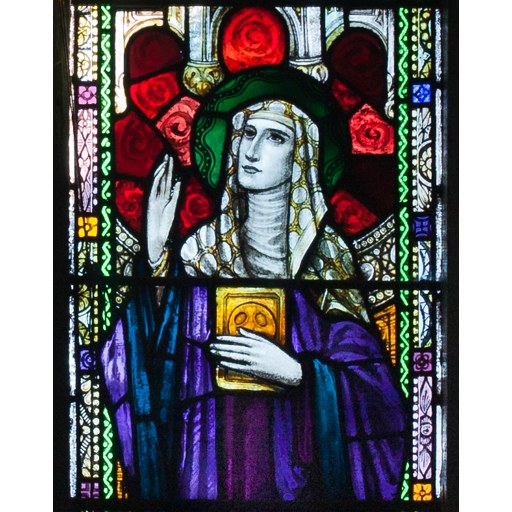
Andreas F. Borchert
License: CC BY-SA 4.0
Íte of Killeedy
Saint- Life Span
- d. 570
- Feast Day
- 15 January
- Gender
- female
- Church
- Catholic
Places
Roles & Family
Patronage
Killeedy;Limerick
Biography
Íte of Killeedy (also known as Ita, Ida, or Mide) was a sixth-century Irish nun and abbess, remembered in medieval tradition as the Foster Mother of the Saints of Ireland and sometimes as the Brigid of Munster. She belonged to the Déisi of what is now County Waterford. Later hagiography names her father as Cennfoelad (Kennfoelad) and her mother as Necta. No contemporary record of her birth survives, and a precise birth year cannot be verified; later tradition simply places her life in the sixth century. Almost everything known about her depends on a Latin vita composed centuries after her death, together with Irish martyrologies and Munster local tradition. That Life mixes regional memory with conventional miracle stories and must be used with caution as history.
According to the vita, Íte refused a politically advantageous marriage arranged by her family and chose consecrated virginity. After obtaining her father's consent she left home and settled at Cluain Credail in the territory of the Uí Conaill Gabra, in present-day western County Limerick. The place later took her name as Cell Íte, anglicized Killeedy. There she founded a monastery for women and ruled it as abbess. The community became a noted centre of religious life in Munster. Tradition describes her as austere, gifted with prophecy, and devoted to the poor and the sick, and it attributes various healings to her. A well-known penitential anecdote, of uncertain historical value, tells that she endured a hidden wound or infestation in her side as a form of mortification until it was discovered.
Her monastery also maintained a school at which boys were educated. Irish tradition holds that Brendan the Navigator spent part of his childhood under her care and that she later advised him in connection with his voyages. Other Munster saints, including Mochoemoc (sometimes described as her nephew), are likewise associated with her fostering, though the historical basis of each individual link is uneven. A saying attributed to her names three things pleasing to God: true faith in God with a pure heart, a simple life with piety, and generous love. Medieval etymology explained her Irish name Íte as meaning thirst, that is, thirst for divine love. These traditions, whether or not they preserve sixth-century fact, established her reputation as a teacher and spiritual mother rather than as a biological parent; she is presented throughout as a consecrated virgin.
Íte died at Killeedy and was buried at her own monastery. Her feast is kept on 15 January; later reference works commonly give the year of her death as 570. Devotion to her was especially strong in Munster. She is regarded as patron of Killeedy and is closely associated with County Limerick. After Brigid of Kildare she ranks among the most prominent female saints of early Christian Ireland. No papal act of canonization is recorded; her sainthood belongs to the older pattern of local cult and liturgical commemoration before the later centralized process. The monastic site at Killeedy, later marked by church remains and a round tower, continued to be identified with her memory even after Viking raids and subsequent rebuilding. While the written Life is late and conventional in many of its miracles, the stability of her feast, her place-name at Killeedy, and her title as foster-mother of saints indicate a genuine early medieval cult in Munster.