Jacob of Nisibis is a saint of the Catholic Church (d. 338). Jacob of Nisibis's feast day is celebrated on 15 July.
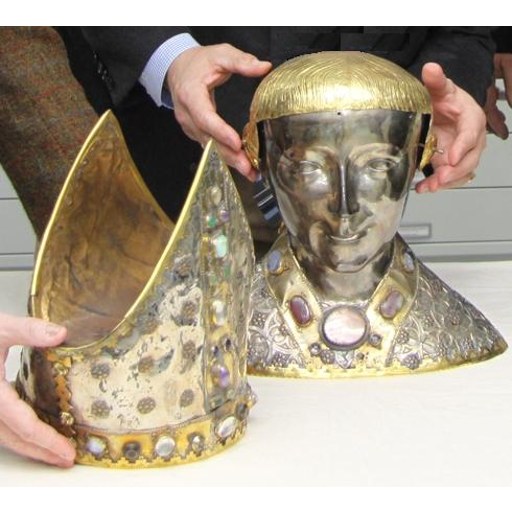
bph (Bischöfliche Pressestelle Hildesheim)
License: Attribution
Jacob of Nisibis
Saint- Life Span
- d. 338
- Feast Day
- 15 July
- Gender
- male
- Church
- Catholic
Places
Relics & Where to Venerate
Location unknown
== Relics == The Tomb of Saint Jacob of Nisibis located at the newly-excavated Church of Saint Jacob of Nisibis in Turkey
Roles & Family
Biography
Jacob of Nisibis, also known as James of Nisibis or Mar Yaʿqob, was a fourth-century Christian bishop, ascetic, and saint who held the see of Nisibis in Mesopotamia (today Nusaybin in southeastern Turkey). Almost nothing verifiable is known of his birth, parentage, or early family life. Later Armenian narratives that present him as a kinsman of Gregory the Illuminator are treated by most modern historians as legendary rather than documentary. The principal Greek account of his career is that of Theodoret of Cyrrhus, who describes Jacob as having adopted a severe outdoor ascetic life in the mountains near Nisibis from his youth, without woven clothing and living on uncultivated plants. His reputation for holiness led to his election as bishop of Nisibis, an office he is generally held to have taken up in the early fourth century, around 308–309. He is the first bishop of that city whose name is securely attested in the historical record.
As bishop he was a leading defender of Nicene orthodoxy in the Roman East. He attended the First Council of Nicaea in 325, opposed Arian teaching, and subscribed to the Nicene Creed. He is remembered as the spiritual father and teacher of Ephrem the Syrian, who was baptized and served the church of Nisibis during Jacob’s episcopate and who later commemorated him in Syriac hymnody. Jacob is credited with building the cathedral church of Nisibis and with encouraging Christian instruction in the city, although the famous School of Nisibis as a formal institution took shape mainly in later generations. Ancient literary catalogues, including Gennadius of Massilia, ascribe treatises and homilies to him; the Syriac discourses sometimes circulated under his name are of disputed authenticity and are often assigned to later writers.
Hagiographical sources, again chiefly Theodoret, attach several miracle stories to Jacob, in the manner typical of fourth-century episcopal lives, including acts of judgment and the finding of water in dry country. The episode most closely connected with his death is the first Sasanian siege of Nisibis by Shapur II, which followed the death of the emperor Constantine and is dated to 337 or 338. In that narrative the bishop went up on the walls, prayed for the city’s deliverance, and a plague of insects fell upon the Persian elephants and cavalry, helping to break the siege. Jacob died during or immediately after these events and is usually dated to 338 in the martyrologies. He was buried at Nisibis. His known successors in the see included Babu and Vologeses; the latter’s name is inscribed on the baptistery of Nisibis, dated 359, which still stands.
When the emperor Jovian ceded Nisibis to Persia in 363, many Christians, including Ephrem, left the city. Jacob continued to be venerated as a confessor and wonder-worker in the Syriac, Greek, Armenian, and Latin churches. His chief feast is 15 July in the Roman Martyrology and in some Eastern calendars, with other commemorations, notably 13 January, in Orthodox and Oriental Orthodox usage. The Church of Saint Jacob (Mar Yaʿqub) in Nusaybin is associated with his memory and is traditionally said to contain his tomb. He was not the object of a later medieval papal canonization; his cult is ancient and pre-congregational.