Janez Frančišek Gnidovec is a venerable of the Catholic Church (1873 - 1939).
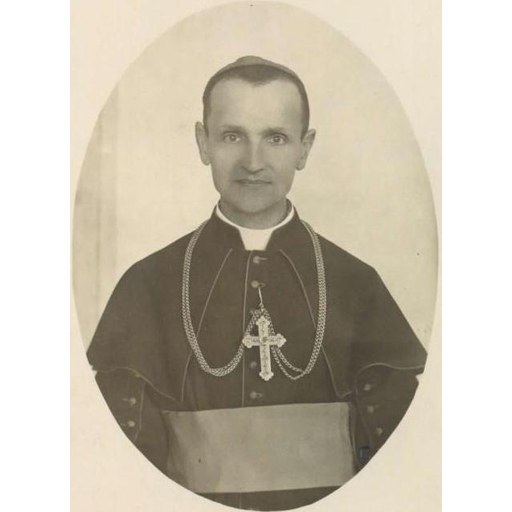
Unknown authorUnknown author
License: Public domain
Janez Frančišek Gnidovec
Venerable- Life Span
- 1873 - 1939 (age 66)
- Gender
- male
- Church
- Catholic
Places
Relics & Where to Venerate
Location unknown
The bodily remains of Janez Frančišek Gnidovec are a first-class relic. Venerated at Holy Heart of Jesus Church (Ljubljana).
Roles & Family
Religious Information
Biography
Janez Frančišek Gnidovec was born on 29 September 1873 in the village of Veliki Lipovec in Lower Carniola (Dolenjska), then a crown land of the Austro-Hungarian Empire and now in Slovenia. He was raised in a rural Catholic family and received secondary schooling in Novo Mesto before studying theology in Ljubljana. He was ordained a priest for the Diocese of Ljubljana in 1896. In the following years he served in pastoral work and, more lastingly, as a teacher and prefect at the classical gymnasium in Novo Mesto, where he taught languages and was known for personal austerity and attention to the young.
After the First World War, in 1919, he entered the Congregation of the Mission, the institute founded by Saint Vincent de Paul and commonly called the Vincentians or Lazarists. He thereby added a missionary religious vocation to his earlier diocesan ministry. The congregation’s work in parish missions, formation, and service of the poor shaped the remainder of his life and prepared him for a see whose Catholics were few, scattered, and pastorally hard to reach.
In 1924 Pope Pius XI appointed him Bishop of Skopje; he was consecrated the same year in Ljubljana. The diocese covered a large mountainous territory in what is now North Macedonia and Kosovo, then within the Kingdom of Yugoslavia. Catholics were a small minority among Orthodox and Muslim majorities and were themselves divided among Albanian, Croatian, Slovenian, and other groups, including some Eastern-rite faithful. Gnidovec learned Albanian in order to preach and hear confessions, made frequent and physically demanding visitations, encouraged catechesis and schools, and lived in marked poverty, often giving away his own clothing and food. He sought to hold a multi-ethnic flock together and to provide for local clergy under difficult political and economic conditions.
His health failed under the strain of travel, climate, and unrelenting work. He went to Ljubljana for medical care and died there on 3 February 1939. He left a reputation for holiness based on evangelical simplicity, Eucharistic piety, and missionary self-sacrifice rather than on high office or published writings. A cause for beatification was later introduced, and he is honored as a Servant of God; he has not been beatified or canonized, and no universal feast day or official patronages have been assigned to him. His memory is kept especially among Slovenian Catholics and among the Catholic communities of the Skopje region.