Jānis Pommers is a saint of the Eastern Orthodox Church (1876 - 1934). Jānis Pommers's feast day is celebrated on 12 October.
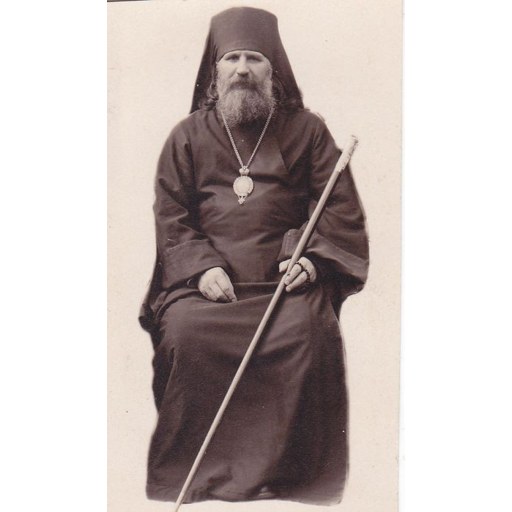
Unknown authorUnknown author
License: Public domain
Jānis Pommers
Saint- Life Span
- 1876 - 1934 (age 58)
- Feast Day
- 12 October
- Gender
- male
- Church
- Eastern Orthodox
Places
Relics & Where to Venerate
Location unknown
The bodily remains of Jānis Pommers are a first-class relic. Venerated at Pokrov Cemetery.
Roles & Family
Canonization
Biography
Jānis Pommers, known in the Orthodox Church as Archbishop John of Riga, was born on 6 January 1876 in Lielstraupe parish in the Livonia Governorate of the Russian Empire, in the territory of present-day Latvia. He came from a Latvian peasant family that belonged to the Orthodox Church, a minority confession among Latvians, who were predominantly Lutheran. After early schooling he entered the Riga Theological School and then the Riga Theological Seminary, completing seminary studies in the late 1890s. He continued at the Kiev Theological Academy, where he received a candidate of theology degree at the beginning of the twentieth century. He then taught in Orthodox seminaries of the Russian Empire, including those at Chernigov and Vologda, and later served as inspector and rector of theological schools.
He was ordained and received monastic tonsure with the name John. In 1912 he was consecrated Bishop of Slutsk, a vicar of the Minsk diocese, and subsequently served in other sees, including the Taganrog region. During the revolutionary years he was Bishop of Penza, where Bolshevik authorities arrested him and subjected him to persecution; he narrowly escaped execution. In 1921, after Latvia had become an independent republic, he was appointed Archbishop of Riga and Latvia. Patriarch Tikhon of Moscow granted the Orthodox Church in Latvia a form of autonomy, and Archbishop John reorganized diocesan life, defended church property, and provided pastoral care for both Latvian-speaking and Russian-speaking Orthodox communities. He was the first ethnic Latvian to hold the see of Riga as an Orthodox archbishop and encouraged the use of Latvian in church life alongside Church Slavonic.
In independent Latvia he became a prominent public figure as well as a hierarch. He was elected to the Saeima, the Latvian parliament, in successive terms from the mid-1920s, representing Orthodox citizens and speaking in defence of religious freedom and minority rights. He was a consistent critic of communism and of Soviet influence. Those positions, together with his visibility, made him a political target. On the night of 11–12 October 1934 he was murdered at his summer residence on the shore of Lake Ķīšezers in Riga: he was bound and shot, and the house was set on fire. Contemporary investigations did not produce a conclusive public conviction; later historical assessments have generally attributed the killing to Soviet secret-police agents.
He was buried at the Pokrov (Intercession) Cemetery in Riga. The Russian Orthodox Church Outside Russia glorified him as a hieromartyr in 1981. The Latvian Orthodox Church glorified him locally in 2001, and he is also commemorated among the New Martyrs and Confessors by the Moscow Patriarchate. His principal feast day is 12 October. In the early twenty-first century his relics were transferred to the Cathedral of the Nativity of Christ in Riga, where they are venerated. He is remembered as the leading hierarch of Latvian Orthodoxy in the interwar period and as a martyr of the Soviet campaign against the Church.