Jeanne Frances is a saint of the Catholic Church (1572 - 1641). Jeanne Frances's feast day is celebrated on 12 August. Jeanne Frances is the patron saint of widows;forgotten people;parents separated from children;in-law problems;those who have lost parents.
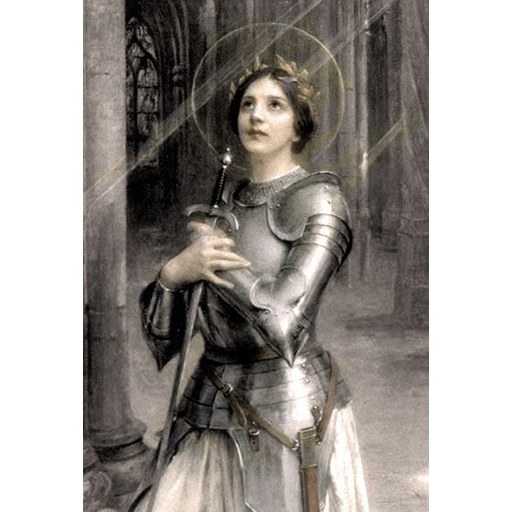
https://www.pinterest.com/hcousino/st-joan-of-arc-pictures/
License: unknown
Jeanne Frances
Saint- Life Span
- 1572 - 1641 (age 69)
- Feast Day
- 12 August
- Gender
- female
- Church
- Catholic
Places
Roles & Family
Religious Information
Patronage
widows;forgotten people;parents separated from children;in-law problems;those who have lost parents
Canonization
Biography
Jeanne-Françoise Frémyot, known in English as Jane Frances de Chantal, was born in Dijon in Burgundy in 1572. Her father, Bénigne Frémyot, was president of the parliament of Burgundy; her mother died while Jeanne was still an infant, and she was raised in a devout household of the parlementaire class. In 1592 she married Christophe de Rabutin, Baron de Chantal, and the couple lived at the château of Bourbilly, where she took an active part in managing the household and estates. The marriage lasted about eight years and produced several children, among them a son, Celse-Bénigne, later the father of the letter-writer Madame de Sévigné, and daughters who survived to adulthood. In 1601 the baron was fatally wounded in a hunting accident, leaving Jeanne a widow in her late twenties, responsible for her children and for the family property.
After her husband's death she took a private vow of chastity, simplified her way of life, and devoted herself to the education of her children and to care for the poor and sick on her lands. In Lent of 1604 she heard Francis de Sales, the Bishop of Geneva then in exile from his see, preach in Dijon, and she placed herself under his spiritual direction. Over the following years they discerned a vocation to found a new form of religious life suited to women who, by age, health, or widowhood, could not enter the more austere enclosed orders of the day. After arranging marriages for her daughters and placing her son with her father, she left Burgundy. In June 1610, in a house at Annecy in Savoy, she and a small group of companions began the Order of the Visitation of Holy Mary. The institute was first conceived as combining a contemplative life with visits of charity to the poor and sick; later, under episcopal pressure, it adopted full enclosure while retaining a distinctive spirit of gentleness, humility, and interior liberty associated with Salesian spirituality.
As foundress and superior, Jeanne Frances spent the remaining three decades of her life establishing monasteries across France and Savoy, forming novices, and governing a rapidly growing congregation. She maintained an extensive correspondence with Francis de Sales until his death in 1622 and thereafter with other ecclesiastical directors, and a substantial body of her letters survives. Her later years were marked by family sorrow, including the death of her son Celse-Bénigne in 1627, by tensions within her kindred, and by the wars, plagues, and ordinary hardships of religious foundation in the early seventeenth century. In December 1641, while visiting the Visitation community at Moulins, she fell ill and died there on 13 December. Her remains were taken to Annecy and enshrined in the church of the Visitation, later raised to the rank of basilica.
The Visitation order promoted her cause of canonization. She was beatified by Pope Benedict XIV in 1751 and canonized by Pope Clement XIII in 1767. In the General Roman Calendar her feast is observed on 12 August. Because her life encompassed marriage, motherhood, widowhood, and the founding of a religious family, she has been invoked as a patron of widows, of forgotten people, of parents separated from their children, of those experiencing difficulties with in-laws, and of those who have lost parents.