Jérôme Lejeune is a venerable of the Catholic Church (1926 - 1994).
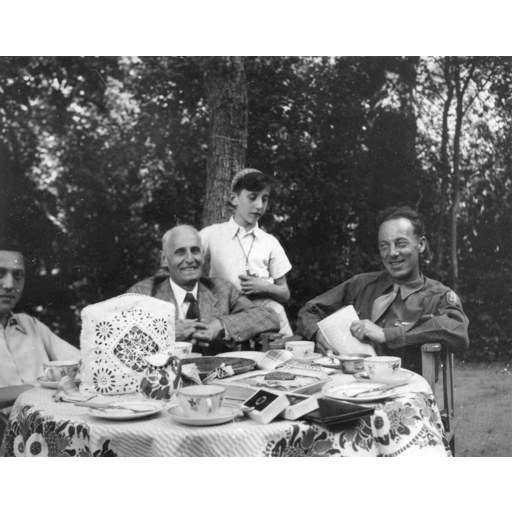
WallyFromColumbia at English Wikipedia
License: Public domain
Jérôme Lejeune
Venerable- Life Span
- 1926 - 1994 (age 68)
- Gender
- male
- Church
- Catholic
Places
Relics & Where to Venerate
Location unknown
The bodily remains of Jérôme Lejeune are a first-class relic. Venerated at Q110338353.
Roles & Family
Religious Information
Biography
Jérôme Jean Louis Marie Lejeune was a French pediatrician and geneticist whose identification of the chromosomal basis of Down syndrome became a founding result of human cytogenetics. He was born on 13 June 1926 in Montrouge, near Paris, and received his medical training in France in the years after the Second World War. Early in his career he worked in Paris with the pediatrician and geneticist Raymond Turpin on children then commonly described as having mongolism. In 1958, applying still-new methods of karyotyping, Lejeune and his collaborators showed that these patients typically had forty-seven chromosomes rather than the usual forty-six, the extra chromosome being a third copy of chromosome 21. The observation was published in 1959 and furnished the first clear demonstration that a human chromosomal abnormality could cause a defined clinical syndrome.
Lejeune’s later laboratory work extended the same cytogenetic approach to other conditions. He helped characterize cri du chat syndrome, produced by a deletion on the short arm of chromosome 5, and contributed to the description of further chromosomal disorders. He became professor of fundamental genetics at the Faculty of Medicine of the University of Paris and was elected to the Académie des Sciences. He was also a member of the Pontifical Academy of Sciences. Alongside this scientific career he took an increasingly public Catholic and pro-life position. He insisted that the unborn child with a chromosomal anomaly was a human patient rather than a candidate for elimination, and he opposed the use of prenatal diagnosis as a step toward abortion. That stance, uncommon among many of his scientific contemporaries, made him a prominent and often controversial figure in bioethical debate in France and internationally.
A married Catholic layman and the father of five children with his wife Birthe Bringsted, Lejeune remained a practicing believer throughout his life. Pope John Paul II, who knew and esteemed him, named him the first president of the Pontifical Academy for Life in February 1994. Lejeune was already ill with lung cancer and died in Paris on 3 April 1994, only weeks after assuming that office. His family and collaborators later established the Jérôme Lejeune Foundation to continue research and care for people with genetic intellectual disabilities. A cause for beatification was opened in the Archdiocese of Paris. Pope Francis declared him Venerable on 21 January 2021, recognizing the heroic character of his virtues. He has not been beatified or canonized, and the Church has assigned him neither a feast day nor official patronages.
Lejeune’s scientific legacy rests on the demonstration that Down syndrome is trisomy 21, a result that opened the modern era of clinical cytogenetics. Those who promote his cause present his moral legacy as an insistence that persons with intellectual disabilities possess full human dignity and that medicine’s task is to treat them rather than to select against them. Both the laboratory discovery of the late 1950s and the public controversies of his later decades remain subjects of historical and biographical study.