Joan Gilabert Jofré is a servant of god of the Catholic Church (1350 - 1417).
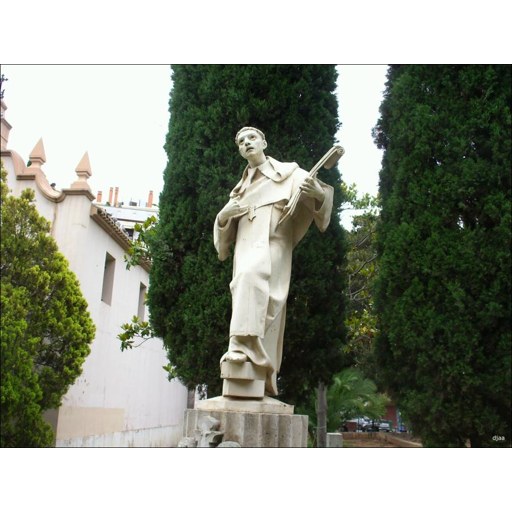
José Aixa Iñigo
License: Public domain
Joan Gilabert Jofré
Servant of God- Life Span
- 1350 - 1417 (age 67)
- Gender
- male
- Church
- Catholic
Places
Relics & Where to Venerate
Location unknown
The bodily remains of Joan Gilabert Jofré are a first-class relic. Venerated at Monastery of Santa Maria, El Puig.
Roles & Family
Religious Information
Biography
Joan Gilabert Jofré, known in Spanish as Juan Gilabert Jofré and often called Fray Jofré, was a Mercedarian friar of Valencia in the Crown of Aragon. Born in Valencia in 1350, he entered the Order of the Blessed Virgin Mary of Mercy, a religious congregation founded in the thirteenth century for the redemption of Christian captives. Living under the order’s vows of poverty, chastity, and obedience, he worked as a preacher in his native city during the late fourteenth and early fifteenth centuries, a period marked by the Western Schism, recurrent plague, and sharp social contrasts in the prosperous port of Valencia.
His lasting historical reputation rests on a single, well-attested episode. On 24 February 1409, while going to preach a Lenten sermon in Valencia Cathedral, Jofré encountered a crowd attacking a mentally disturbed man in the street. He devoted that day’s sermon to denouncing the abuse of the insane and calling on the faithful to found a house of charity where such persons could be received, protected, and cared for. A group of Valencian citizens, including the merchant Lorenzo Salom, formed a confraternity in response. With the support of the municipal government and of King Martin I of Aragon, they established the Hospital de Santa Maria dels Innocents, also known as the Hospital dels Folls e Ignocents (Hospital of Fools and Innocents). A papal bull from Benedict XIII, the Avignon pope then recognized in the Crown of Aragon, confirmed the foundation. The hospital is traditionally described as the first in Christian Europe devoted specifically to the mentally ill, though scholars also point to earlier Islamic hospitals that treated mental disorders.
Jofré is more accurately described as the preacher who inspired the work than as its sole founder; the confraternity and the city carried the institutional burden. The hospital nevertheless became inseparable from his name in Valencian memory. It later merged with other urban hospitals and is regarded as a forerunner of the Hospital General of Valencia. In the history of psychiatry and of medieval charity, the 1409 foundation is cited as an early European attempt to replace public mockery and violence toward the insane with organized, if still rudimentary, institutional care.
Jofré died in Valencia in 1417. He has been remembered locally as a figure of mercy toward the marginalized, and his name appears in histories of the Mercedarian order and of Valencian hospitals. He has not been formally beatified or canonized by the Holy See and has no universal feast in the Roman calendar. His importance is historical rather than cultic: the documentary trail of the 1409 sermon and hospital remains the principal source for his life, and later legend has added little that can be independently verified.