Joaquim Alves Brás is a venerable of the Catholic Church (1899 - 1966).
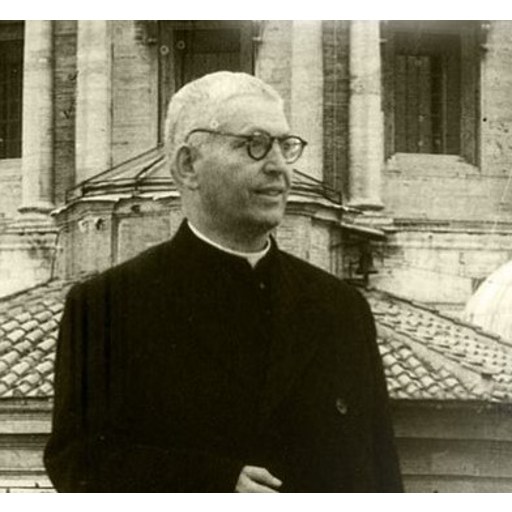
ACG.92
License: CC BY-SA 4.0
Joaquim Alves Brás
Venerable- Life Span
- 1899 - 1966 (age 67)
- Gender
- male
- Church
- Catholic
Places
Relics & Where to Venerate
Location unknown
The bodily remains of Joaquim Alves Brás are a first-class relic. Venerated at Prazeres Cemetery.
Roles & Family
Biography
Joaquim Alves Brás was a Portuguese Catholic priest of the twentieth century, known above all for his organized apostolate on behalf of the Christian family. He was born in 1899 in Vila Nova de Famalicão, in the Minho region of northern Portugal, a rural district of strong traditional piety. Surviving sources say little about his childhood beyond a conventional seminary formation typical of Portuguese diocesan clergy of his generation. He was ordained in the 1920s, at a time when the Portuguese Church was still recovering from the anticlerical legislation of the First Republic and adjusting to the Catholic-friendly but authoritarian Estado Novo. Although his origins lay in the Archdiocese of Braga, a substantial part of his mature ministry was exercised in Lisbon.
From the later 1930s onward he concentrated on the spiritual and social needs of married couples and their children. Urbanization, emigration, and economic pressure were placing new strains on household life, and Alves Brás sought to answer them with both doctrine and practical help. He gathered women who wished to live consecrated life in the world specifically in order to serve families; that group became the Instituto Secular das Cooperadoras da Família. Members of the institute take the evangelical counsels while remaining in ordinary social settings, and they work in catechesis, marriage preparation, home visiting, and assistance to families in difficulty. The foundation received diocesan approval and later pontifical recognition, securing the continuation of his work after his death.
His pastoral method combined classical Catholic teaching on the sacrament of matrimony—its indissolubility, its openness to life, the duties of spouses—with attention to the concrete hardships of Portuguese households. He organized retreats, conferences, and “family weeks,” encouraged domestic prayer (especially the rosary), and insisted that fathers take an active part in the religious education of their children. He showed particular concern for poorer families and for those affected by internal migration or emigration. He left no large published corpus, but his conferences and shorter writings circulated among priests and lay people engaged in Catholic Action and family movements in mid-century Portugal.
Alves Brás died in Lisbon in 1966. The secular institute he founded, together with a circle of priest and lay collaborators, carried forward the family apostolate. In subsequent decades testimonies of his priestly virtues were collected and a cause for beatification was introduced in the Patriarchate of Lisbon; he has not been beatified or canonized and therefore has no universal feast day or official patronages. Compared with members of large religious orders, the documentary trail of his early life remains relatively modest, as is common for diocesan priests. What is securely attested is his role in shaping Portuguese Catholic family ministry in the middle decades of the twentieth century, a role still visible in the continuing work of the Cooperadoras da Família and in the ecclesiastical archives that preserve his correspondence and the records of the institute.