John is a saint of the Catholic Church.
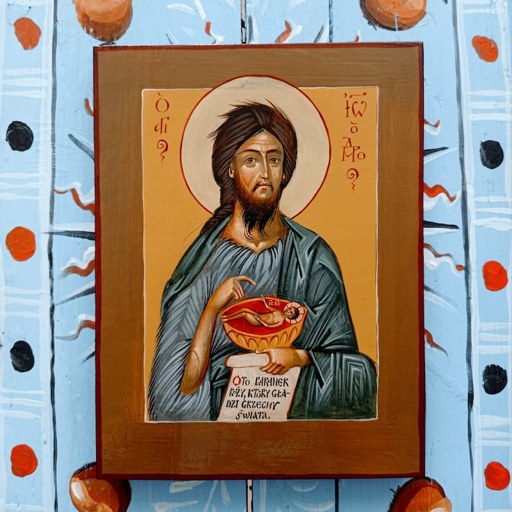
https://www.etsy.com/uk/listing/1518487637/saint-john-the-baptist-picture-icon
License: unknown
John
Saint- Gender
- male
- Church
- Catholic
Biography
The designation John, given without a surname, epithet, see, century, feast day, Wikidata identifier, or other discriminator, does not identify a single historical person. John (from Hebrew Yohanan, meaning Yahweh is gracious) is among the most common masculine given names in Christian history. It is borne by New Testament figures, many popes and patriarchs, and a very large number of canonized and locally venerated saints. No reliable source can attach one birth year, death year, city, or burial place to an otherwise unspecified John, and substituting any famous namesake would be guesswork rather than verification.
Because the subject cannot be uniquely identified, the remaining biographical fields cannot be filled from documented evidence. There is no single birthplace or country of death, no attested spouse or children, and no one religious order, papal or patriarchal tenure, canonization, or list of patronages that can be assigned without arbitrarily choosing among many different men. Documented celibacy or marriage, and documented offspring or the lack of them, likewise belong to particular individuals, not to the bare name.
In the Christian tradition the best-known bearers of the name include John the Baptist, whose ministry in the Jordan region is described in the Gospels; John the Apostle, associated in later tradition with Ephesus and with the Johannine writings; John Chrysostom, archbishop of Constantinople in the late fourth and early fifth centuries; John of Damascus in the Umayyad period; and numerous medieval and modern saints and popes. Each of these figures has a distinct chronology, geography, and cult. None of them can be shown, on the information supplied, to be the intended subject.
A usable hagiographical or historical record would require at least one further identifier: an epithet (the Baptist, Chrysostom, of the Cross), a place of origin or ministry, a feast date, an office, or a catalogue identifier. Until that is provided, the only accurate statement is that the subject remains unidentified, and all specific claims about dates, places, offices, and cult are left blank rather than invented.