John is a saint of the Catholic Church.
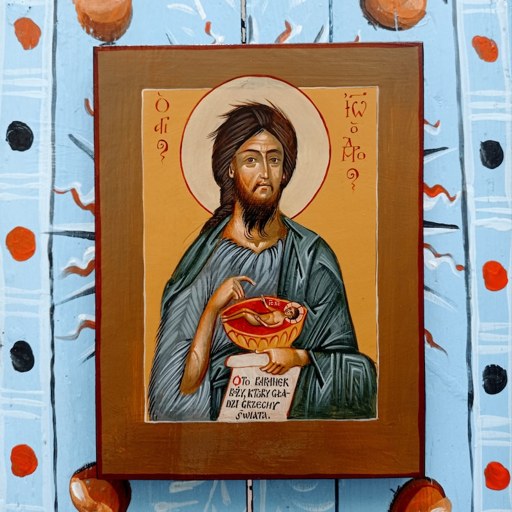
https://www.etsy.com/uk/listing/1518487637/saint-john-the-baptist-picture-icon
License: unknown
John
Saint- Church
- Catholic
Biography
The name John is among the most common in Christian hagiography and cannot be tied to a single historical person without further identification. No Wikidata identifier, Wikipedia article, feast date, see, religious order, or other disambiguating detail was supplied. Because of that, no birth year, death year, birthplace, burial place, office, patronage, or canonization can be verified for this subject, and none should be invented. Substituting the career of any particular John—apostle, baptist, pope, patriarch, or later saint—would be conjecture.
In the New Testament and early church, the name already covers several distinct figures. John the Baptist, active in first-century Judaea, is remembered as an ascetic preacher and the one who baptized Jesus; tradition places his death under Herod Antipas. John the Apostle (often identified in later tradition with the Beloved Disciple and, more controversially, with the author of the Fourth Gospel and Revelation) is associated with Galilee and, in later legend, with Ephesus. These identifications are themselves debated among historians and cannot be collapsed into one biography. Neither figure can be assumed to be the intended subject here.
Later centuries multiplied Johns of high ecclesiastical rank. Among bishops of Rome were John I (sixth century), John XXII and John XXIII in the later medieval and modern papacy, and others; the Coptic Church of Alexandria has had its own line of popes named John. Eastern churches commemorate patriarchs and catholicoi of that name, as well as John Chrysostom (late fourth–early fifth century, Antioch and Constantinople) and John of Damascus (seventh–eighth century, Syria). Monastic and missionary saints include John Cassian, John Climacus, John of Beverley, John of God, John of the Cross, and many national patrons. Each has a separate, documentable life; none is attested by the label “John” alone.
Hagiographical calendars list dozens of feast days for saints named John, with patronages ranging from theologians and hospitals to particular cities and trades. Without a specified cult, order, or locality, no feast day or patronage list can be assigned. Marital status, children, and religious profession likewise vary: some Johns were married before or outside monastic life; many were celibate clergy or monks; for others the sources are silent. Those fields therefore remain unknown.
A careful historical notice must stop at this point. If a particular John is meant—by century, diocese, order, or a known epithet such as Chrysostom, Damascene, or Capistrano—that information would allow dates, places, and offices to be checked against standard sources. On the data given, the subject remains unidentified, and every biographical field is left blank rather than filled by guesswork.