John is a saint of the Catholic Church.
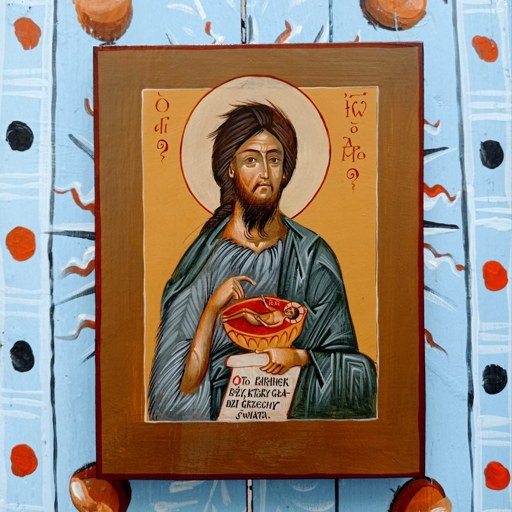
https://www.etsy.com/uk/listing/1518487637/saint-john-the-baptist-picture-icon
License: unknown
John
Saint- Gender
- male
- Church
- Catholic
Biography
The subject is identified only as “John,” with no Wikidata identifier, encyclopedia article, epithet, see, century, or other disambiguating mark. John (from Hebrew Yochanan, “Yahweh is gracious”; Greek Ioannes; Latin Iohannes) is among the most common masculine given names in Jewish, Christian, and later European onomastics. In hagiography and church history it belongs to apostles, evangelists, desert fathers, bishops, popes, patriarchs, martyrs, confessors, and modern figures. Without a second name, a place, a feast, or a documented office, no single historical person can be matched to this query, and no birth year, death year, burial, order, or patronage can be verified.
Christian tradition alone preserves many well-attested Johns who must not be conflated. They include John the Baptist in first-century Judaea; John the Apostle and the authorial traditions attached to the Fourth Gospel and Revelation; John Chrysostom, archbishop of Constantinople in the late fourth and early fifth centuries; John of Damascus in Umayyad Syria; numerous bishops of Rome styled John; Coptic popes of Alexandria of that name; and later saints such as John of the Cross, John of God, and John Bosco. Each has a distinct dossier of dates, places, and cult. Assigning any one of them here would be conjecture, which the sources do not support.
Standard hagiographical method therefore leaves the biographical fields empty. A year of taking office is not a year of birth; an epithet or a local cult is not proof of identity; and popularity of the name in calendars does not license filling feast days or patronages from a famous namesake. Married or monastic status, children, papal or patriarchal rank, canonization, and beatification all remain unknown for this unspecified John.
If further identifiers become available—an epithet (the Baptist, Chrysostom, of Beverley), a see, a reliable century and region, a feast in a particular calendar, or a stable encyclopedia or catalogue entry—the record can be reopened and filled from those sources. Until then, honesty requires stating that the subject cannot be identified and that no verified life can be written.