John of God is a saint of the Catholic Church (1495 - 1550). John of God's feast day is celebrated on 8 March. John of God is the patron saint of hospitals;the sick;nurses;the dying;firefighters;booksellers;printers;publishers;alcoholics;people with mental illness;heart patients;hospital workers.
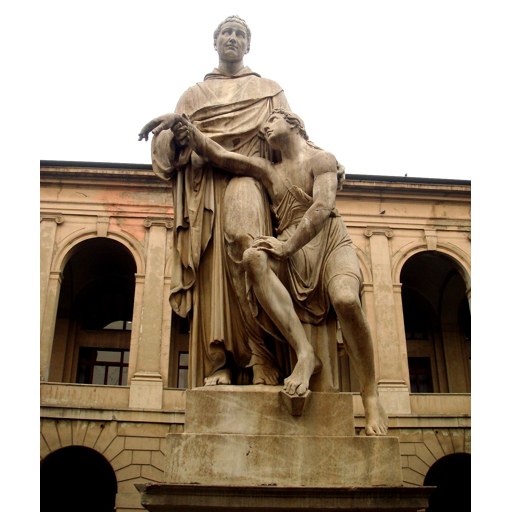
Giovanni Dall'Orto
License: Attribution
John of God
Saint- Life Span
- 1495 - 1550 (age 55)
- Feast Day
- 8 March
- Gender
- male
- Church
- Catholic
Places
Relics & Where to Venerate
Location unknown
The bodily remains of John of God are a first-class relic. Venerated at Granada.
Housed at Our Lady of Victories Basilica · Australia
His body was initially buried in the Church of Our Lady of the Victories, belonging to the Minim friars, and remained there until November 28, 1664, when the Hospitaller Brothers had his relics moved to the church of their hospital in the city, John was canonized by Pope Alexander VIII on October 16, 1690, and later named the patron saint of hospitals and the sick
Roles & Family
Religious Information
Patronage
hospitals;the sick;nurses;the dying;firefighters;booksellers;printers;publishers;alcoholics;people with mental illness;heart patients;hospital workers
Canonization
Biography
John of God was born João Duarte Cidade in 1495 at Montemor-o-Novo in Portugal. Traditional biographies relate that at about the age of eight he left home—whether by running away or by being taken is uncertain in the sources—and came to live in Oropesa in Castile, where a local estate manager named Francisco Mayoral took him in. He worked as a shepherd in that household into adulthood. In the 1520s he enlisted as a soldier in the service of the Holy Roman Emperor Charles V, taking part in campaigns against France and later against Ottoman forces in Hungary. After leaving military life, a period that later caused him remorse, he worked again as a shepherd and then as a peddler of religious books and holy pictures. He spent time in Gibraltar before settling as a bookseller in Granada.
In Granada he heard a sermon by the preacher John of Ávila, which provoked a profound spiritual crisis. Overwhelmed by a sense of his past sins, he publicly lamented his former life, distributed his goods, and behaved with such intensity that he was regarded as mad and confined in the royal hospital of Granada. There he experienced the harsh methods then used on those considered insane, an experience that later shaped his vocation. After his release he placed himself under the spiritual direction of John of Ávila, who advised him to turn his fervor toward concrete service of the poor rather than further public penance.
He began by collecting wood and food for the destitute of Granada and soon opened a house in which he could lodge and nurse the homeless, the sick, and those suffering from mental disorders. He begged alms to support the work and personally attended the patients, insisting that they be treated with dignity unusual for the period. Companions gathered around him. He remained a layman and was never ordained; after his death the community that had formed around his hospital was organized as the Brothers Hospitallers of Saint John of God, a religious institute devoted to the care of the sick that later spread widely in Europe and beyond. A well-known episode recounts that when fire broke out in his hospital he entered the burning building repeatedly to carry patients to safety, an incident later cited in connection with his patronage of firefighters.
He died in Granada on 8 March 1550, the same calendar date as his birth. He was beatified by Pope Urban VIII in 1630 and canonized by Pope Alexander VIII in 1690. The Catholic Church keeps his feast on 8 March. He is invoked as patron of hospitals, nurses, the sick and the dying, firefighters, booksellers and printers, and those afflicted by mental illness, heart disease, and alcoholism. His relics are enshrined in the Basilica of San Juan de Dios in Granada, built in connection with the hospital work he began.