John of Meda is a saint of the Catholic Church (d. 1159). John of Meda's feast day is celebrated on 26 September.
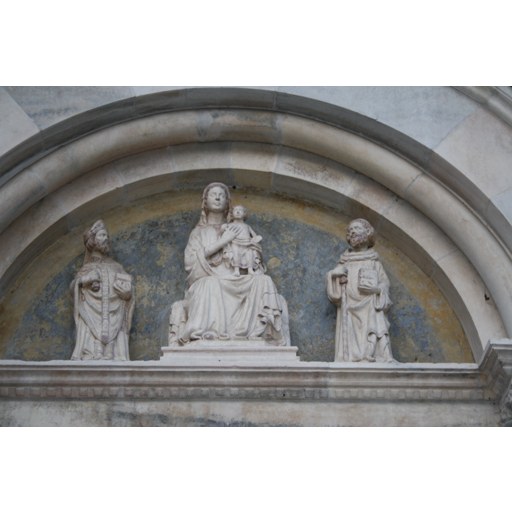
G.dallorto
License: Attribution
John of Meda
Saint- Life Span
- d. 1159
- Feast Day
- 26 September
- Gender
- male
- Church
- Catholic
Places
Roles & Family
Religious Information
Biography
John of Meda, known in Italian as Giovanni da Meda and in later tradition also as Giovanni Oldrati or Oldrado da Meda, was a twelfth-century priest of northern Italy closely associated with the Humiliati. He was born at Meda, a town in the Brianza district of Lombardy north of Milan. The exact year of his birth is not securely recorded in contemporary documents and is only conventionally placed near the beginning of the twelfth century. Later accounts describe him as coming from a family of some local standing, identified in tradition with the Oldrati. He was ordained to the priesthood and exercised ministry in the Ambrosian (Milanese) orbit. He is sometimes also called John of Como, reflecting the geography of the Milan–Como region in which Meda lies, rather than a separately documented career in that city.
The Humiliati were a penitential movement that took shape in Lombardy among lay men and women and some clergy who sought a life of evangelical simplicity, communal prayer, and manual work, especially in the wool trade. In the late eleventh and early twelfth centuries the movement attracted both devotion and suspicion, in part because of unauthorized preaching, and it stood among the popular religious currents that church authorities were attempting to discipline and regularize. Hagiographical tradition assigns John a decisive role in that regularization. It relates that the Virgin Mary appeared to him and charged him to preach penance and to give the Humiliati a rule of life. He is credited with organizing a clerical or monastic branch under a rule that drew on Benedictine and Augustinian models. Tradition further links him with an approval granted by Pope Innocent II in 1134. Modern historians treat the earliest papal privileges of the Humiliati with caution: the documentary record is thin, some texts have been questioned, and the movement’s path from informal penitents to a recognized order was gradual rather than the work of a single founder in the later canonical sense.
John is remembered as a leading superior among the Humiliati and is associated with the strengthening of communities, including the important house at Brera in Milan. The order came to be described as having a threefold structure: canons or priests living in community, nuns, and tertiaries who remained in the world. John’s activity belongs to the phase in which a loosely organized Lombard movement was being given a more conventional religious-order character and brought under hierarchical oversight. That process continued after his death; a more definitive papal settlement for the Humiliati was issued by Innocent III in 1201. Because so much of John’s biography was transmitted by later Humiliati and local Lombard tradition, details of visions, the precise legal character of the 1134 approval, and the exact scope of his founding role cannot all be confirmed from independent twelfth-century sources.
He died on 26 September 1159, according to the date preserved in his cult; Italian tradition places the death at Milan. He was venerated as a saint in Lombardy and among the Humiliati, and his feast is kept on 26 September. There is no securely documented papal canonization or beatification of the later medieval or modern type; his cult was of the local kind typical of many twelfth-century holy priests and community leaders. The Humiliati themselves later declined and were suppressed by Pope Pius V in 1571 after a crisis that included a conspiracy against Cardinal Charles Borromeo. John’s historical profile is therefore that of an obscure but regionally important priest-reformer of twelfth-century Lombardy, known through a mixture of liturgical memory, order tradition, and a small number of later notices rather than through a rich contemporary archive.