Josaphat Kuntsevych is a saint of the Catholic Church (d. 1623). Josaphat Kuntsevych's feast day is celebrated on 12 November. Josaphat Kuntsevych is the patron saint of Ukraine;reunion of Eastern and Western Churches.
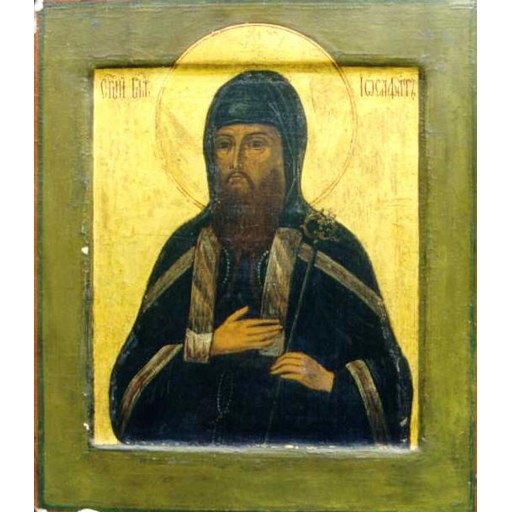
License: Public domain
Josaphat Kuntsevych
Saint- Life Span
- d. 1623
- Feast Day
- 12 November
- Gender
- male
- Church
- Catholic
Places

Relics & Where to Venerate
Location unknown
The bodily remains of Josaphat Kuntsevych are a first-class relic. Venerated at St. Peter's Basilica.
Roles & Family
Religious Information
Patronage
Ukraine;reunion of Eastern and Western Churches
Canonization
Biography
Josaphat Kuntsevych was born in the late sixteenth century in Volodymyr in Volhynia, a Ruthenian town then belonging to the Polish-Lithuanian Commonwealth. His family were Orthodox Christians of the merchant class; he received the baptismal name Ioann. As a youth he was sent to Vilnius and placed with a merchant, in a city that was a major center of Orthodox, Uniate, and Latin Catholic life after the Union of Brest of 1596. That union had divided the Ruthenian church: some bishops entered communion with Rome while retaining the Byzantine rite, Church Slavonic liturgy, and married parish clergy, while others and many lay brotherhoods rejected the union as a surrender of Orthodoxy. In this setting the young Ioann was attracted to the Uniate party. In the early seventeenth century he entered the monastery of the Holy Trinity in Vilnius, which had accepted the union, and took the monastic name Josaphat. He became known for fasting, night vigils, and intense personal devotion, as well as for learning sufficient to argue the case for communion with the Roman see from Eastern sources.
Together with Joseph Velamin Rutsky, who became a leading Uniate metropolitan, Josaphat labored to revive Basilian monasticism, which had declined in the Ruthenian lands. He was ordained a priest and gained a reputation as a preacher in Ruthenian and as a strict but reforming superior. The Basilian houses under their influence adopted a more regular common life and a clearer Catholic profession while remaining Byzantine in rite. In 1617 Josaphat was named coadjutor bishop of Polotsk and was consecrated to the episcopate. In 1618 he succeeded as archeparch of Polotsk, a see whose territory covered much of what is now northern Belarus, including the important towns of Vitebsk and Mstislavl. He undertook visitations, sought to raise the educational level of the clergy, recovered churches and properties for the Uniate church, and required that priests accept the union. He also tried to draw Orthodox communities into communion with Rome. These policies were supported by the Polish-Lithuanian state, which favored the Uniate church as a means of integrating the Ruthenian population, but they were resented by Orthodox burghers, Cossack circles, and the Orthodox hierarchy that was restored in 1620 under the protection of the Ecumenical Patriarchate and of figures such as Meletius Smotrytsky.
Conflict became acute in Vitebsk, a town with a strong Orthodox majority and a tradition of urban brotherhoods. Josaphat’s insistence on Uniate control of churches, his disciplinary measures against clergy who rejected the union, and rumors that he intended further Latinization produced a climate of hostility. In November 1623, during a stay in Vitebsk, an incident involving the detention of an Orthodox cleric brought a crowd to the archepiscopal residence. On 12 November the mob forced its way in. Josaphat came out to meet them, was struck with an axe, shot with a firearm, and beaten to death. His body was dragged through the town and thrown into the Dvina. The killing was quickly interpreted by Uniates as martyrdom for the Catholic faith and for ecclesiastical unity; Orthodox contemporaries often portrayed it as the result of his own harshness and of Polish-backed coercion. The body was recovered from the river and taken for burial to Polotsk, where a cult began almost at once, accompanied by claims of miracles and of the incorruption of the remains.
The Holy See moved relatively quickly to recognize the cult. Pope Urban VIII beatified Josaphat in 1643. In the nineteenth century, amid the struggles of the Uniate churches under Russian imperial pressure, Pope Pius IX canonized him on 29 June 1867, the first such canonization of an Eastern Catholic. His relics were moved more than once because of wars and changing borders; a principal portion was eventually placed in Saint Peter’s Basilica in Vatican City, in an altar associated with Saint Basil. In the Roman calendar his feast is 12 November. He is venerated as a patron of Ukraine and as a heavenly intercessor for the reunion of Eastern and Western Christians. Later historical writing has continued to debate the mixture of pastoral zeal, political alliance with the Commonwealth, and coercive methods that marked his episcopate, while Catholic tradition commemorates him as a martyr who died for communion with Rome.