José María Rubio is a saint of the Catholic Church (1864 - 1929). José María Rubio's feast day is celebrated on 2 May.
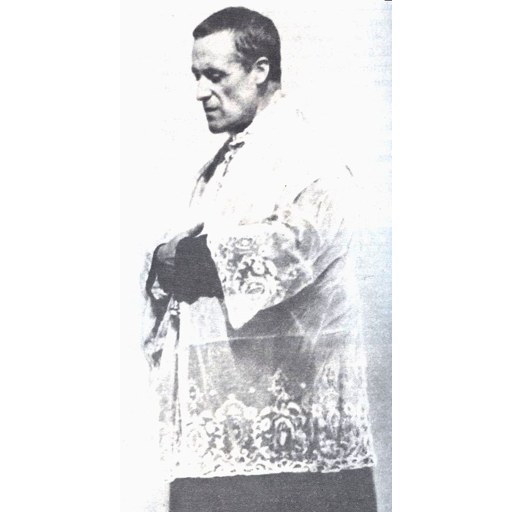
Grentidez
License: Public domain
José María Rubio
Saint- Life Span
- 1864 - 1929 (age 65)
- Feast Day
- 2 May
- Gender
- male
- Church
- Catholic
Places
Relics & Where to Venerate
Location unknown
The bodily remains of José María Rubio are a first-class relic. Venerated at Fourth professed house in Madrid.
Location unknown
His remains are venerated in the church of San Francisco de Borja and the Sacred Heart of the Society of Jesus in Madrid
Roles & Family
Religious Information
Canonization
Biography
José María Rubio y Peralta was born on 22 July 1864 in Dalías, a small agricultural town in the province of Almería in Andalusia, southern Spain. He was raised in a devout Catholic family of modest means and showed from childhood a strong inclination toward the priesthood. He received seminary formation in Almería and later in Granada, and was ordained a priest on 24 September 1887. As a diocesan priest he combined parish ministry with teaching, including work as a seminary professor in Latin, philosophy, and pastoral theology. Those who knew him in these years already remarked on his seriousness, kindness, and intense life of prayer.
Although he felt drawn to the Society of Jesus relatively early in his priesthood, he postponed entering religious life for many years. Family duties, especially care for his mother, and the needs of the diocesan church kept him in the secular clergy. Only after his mother’s death did he consider himself free to follow that vocation. In 1906, already in his early forties, he entered the Jesuit novitiate in Granada. He completed Jesuit formation as a priest of long pastoral experience and in 1911 was assigned to the Jesuit community in Madrid, which remained the center of his public ministry until the end of his life.
In Madrid, Rubio became widely known as a preacher, confessor, and spiritual director. Early twentieth-century Madrid was growing quickly, and large working-class districts were poorly served by the Church. He went into those neighborhoods, organized catechesis for children and adults, encouraged frequent Communion and Eucharistic devotion, and enlisted lay collaborators to extend pastoral care among laborers and the poor. He was a sought-after confessor at the Jesuit church, and many who came to him attributed to him unusual insight in the confessional. Contemporaries called him the Apostle of Madrid. His own spirituality was marked by devotion to the Sacred Heart of Jesus, to the Eucharist, and by a simple, mortified personal life.
Rubio’s health failed in the late 1920s. In the spring of 1929 he was sent to rest at the Jesuit house in Aranjuez, south of Madrid, and he died there on 2 May 1929, at the age of sixty-four. Devotion to him as a holy priest spread quickly among those who had known his ministry in the capital. Pope John Paul II beatified him in Madrid on 6 October 1985, during an apostolic visit to Spain, and canonized him in Saint Peter’s Square on 4 May 2003. The Catholic Church keeps his memorial on 2 May, the anniversary of his death. He is remembered above all in connection with Madrid and with the ministries of confession, spiritual direction, and care for the urban poor.