Joseph Volotsky is a venerable of the Catholic Church (1440 - 1515). Joseph Volotsky's feast day is celebrated on 9 September.
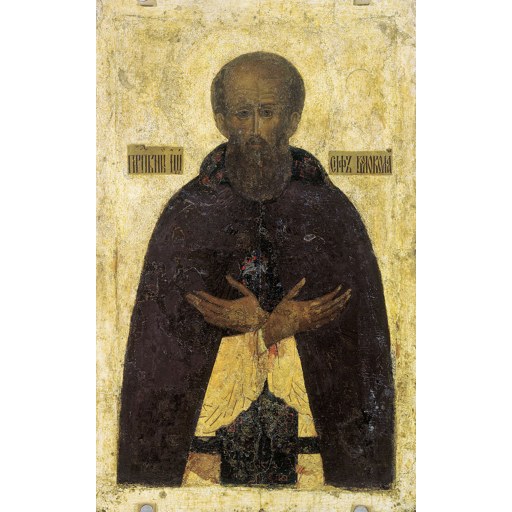
Unknown authorUnknown author
License: CC BY-SA 4.0
Joseph Volotsky
Venerable- Life Span
- 1440 - 1515 (age 75)
- Feast Day
- 9 September
- Gender
- male
- Church
- Catholic
Places
Relics & Where to Venerate
Location unknown
The bodily remains of Joseph Volotsky are a first-class relic. Venerated at Joseph-Volokolamsk Monastery.
Roles & Family
Canonization
Biography
Joseph Volotsky, known in the world as Ivan Sanin, was born in 1440 in the village of Yazvische near Volokolamsk, in the Grand Duchy of Moscow, to a family of provincial landowners. His parents, Ioann and Marina Sanin, were devout; several of his brothers later became monks as well, among them Vassian. As a boy he received a Church Slavonic education grounded in Scripture and the liturgy. Around the age of twenty he entered the Monastery of St. Paphnutius at Borovsk, where Abbot Paphnutius of Borovsk tonsured him with the name Joseph. He remained there for nearly two decades, forming himself in a strict cenobitic tradition and gaining a reputation for learning, austerity, and practical ability.
After Paphnutius died in 1477, the brethren elected Joseph hegumen. His demand that the community hold all property in common and observe a rigorous round of prayer and labor met resistance, and he left Borovsk. He then visited other northern Russian houses, including the Kirillo-Belozersky Monastery, to study their customs. In 1479, with the patronage of Prince Boris Vasilievich of Volokolamsk, he founded a new monastery dedicated to the Dormition of the Mother of God in the forests near Volokolamsk. That community, later called the Joseph-Volokolamsk Monastery, became one of the most powerful and well-endowed monastic centers in Muscovite Russia.
Joseph composed a detailed monastic rule, often known as the Spiritual Charter, which prescribed common meals, communal ownership, lengthy services, manual labor, and the instruction of novices. He maintained that monasteries required landed wealth in order to feed the poor, ransom captives, sustain schools and libraries, and defend Orthodoxy. This position made him the leading spokesman of the Josephites against the Non-Possessors associated with Nil Sorsky, who held that monks should live in poverty without large estates and should not involve the civil power in the punishment of heretics. The dispute, which occupied the late fifteenth and early sixteenth centuries, shaped Russian monasticism and church-state relations for generations.
Joseph was also the principal literary opponent of the Judaizers, a heterodox movement that appeared in Novgorod and reached the Moscow court. In his major treatise, The Enlightener (Prosvetitel), he refuted their teachings and urged the sovereign to suppress heresy, even by capital punishment. He developed a high doctrine of the sacred authority of the Orthodox ruler, contributing to the ideological foundations of Muscovite autocracy. He died on 9 September 1515 in the monastery he had founded and was soon venerated locally. The Russian Orthodox Church later glorified him as a saint; his relics remain at the Joseph-Volokolamsk Monastery, and he is commemorated on 9 September.