Julia Navarrete Guerrero is a venerable of the Catholic Church (1881 - 1974). Julia Navarrete Guerrero's feast day is celebrated on 21 November.
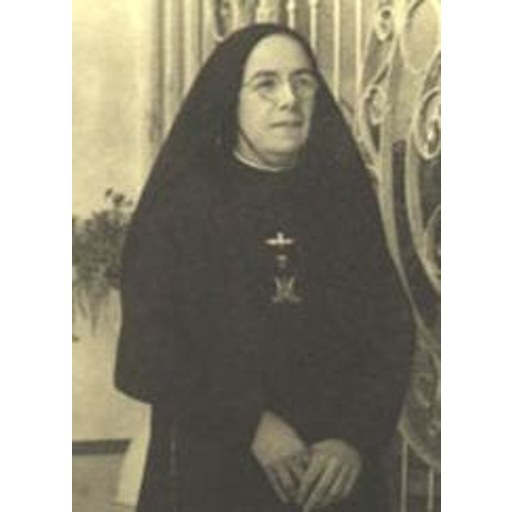
AnonymousUnknown author, no author disclosure
License: Public domain
Julia Navarrete Guerrero
Venerable- Life Span
- 1881 - 1974 (age 93)
- Feast Day
- 21 November
- Gender
- female
- Church
- Catholic
Places
Roles & Family
Religious Information
Canonization
Biography
Julia Navarrete Guerrero was a Mexican Roman Catholic religious sister and foundress of the Missionary Daughters of the Most Pure Virgin Mary (Misioneras Hijas de la Purísima Virgen María). She was born on 18 June 1881 in Oaxaca, in southern Mexico, and was raised in a Catholic family during the late Porfiriato, a period in which the Mexican Church still occupied a large place in social life but already faced growing liberal and secular pressure. From an early age she was drawn to consecrated life and to the Christian education of girls. Her apostolate soon became centered not in her native Oaxaca but in León, in the state of Guanajuato, the city with which her congregation, her long government of it, and her later cult would be most closely identified.
In 1903 she established the Missionary Daughters of the Most Pure Virgin Mary in León. The new community was dedicated to the education of young women, catechesis, and missionary work among the poor. Mother Julia formed her sisters in a spirituality marked by devotion to the Immaculate Virgin, Eucharistic piety, simplicity of life, and obedience to the Church. The institute took root in León and gradually opened schools and houses in other parts of Mexico. She remained the principal superior and spiritual mother of the congregation for many decades, giving it a distinctly Marian and missionary character rather than that of a purely cloistered or purely teaching order.
Her leadership covered some of the most difficult decades in modern Mexican religious history. The Mexican Revolution and the strongly anticlerical Constitution of 1917 restricted the public activity of the Church; the Calles Law and the Cristero conflict of the 1920s drove much of religious life underground. Public worship, religious dress, and Catholic schooling were at times forbidden or severely limited. In that climate she worked to keep her community intact, to continue the education of girls as far as circumstances allowed, and to preserve the congregation’s identity without open confrontation that would have destroyed it. Those who later testified about her described a life of personal austerity, steady governance, and hidden fidelity rather than political prominence.
Julia Navarrete Guerrero spent the rest of her long life in the service of her institute and died in León on 21 November 1974 at the age of ninety-three. After her death a reputation for holiness persisted among her sisters and among families who had been educated or assisted by the Missionary Daughters. A cause for beatification was introduced; the Holy See in due course recognized the heroic character of her virtues and a miracle attributed to her intercession. She was beatified under Pope Francis and is venerated as Blessed Julia Navarrete Guerrero. Her memory remains bound to León and to the educational and missionary work of the congregation she founded, which continued after her death as the principal institutional fruit of her life.