Julian is a saint of the Catholic Church.
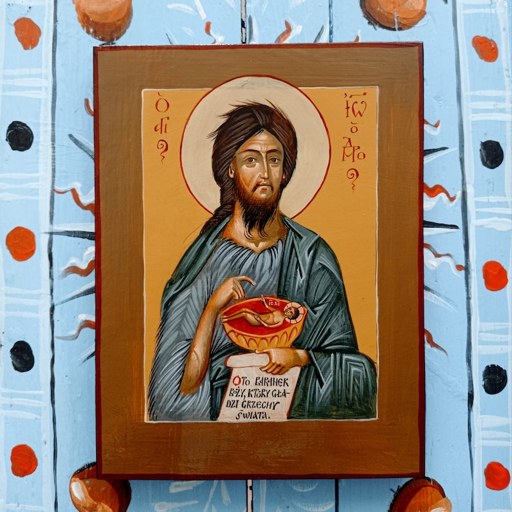
https://www.etsy.com/uk/listing/1518487637/saint-john-the-baptist-picture-icon
License: unknown
Julian
Saint- Church
- Catholic
Biography
The personal name Julian, from the Latin Iulianus, appears repeatedly in Christian hagiography and church history from the third century onward. Martyrs, bishops, hermits, and legendary figures have been commemorated under this name in both Eastern and Western calendars. The present request identifies the subject only as Julian, with no Wikidata identifier, no Wikipedia article, no epithet, no diocese, and no feast date. Under those conditions it is not possible to assign a unique historical person, and therefore no verified year of birth, place of origin, or other biographical datum can be entered without guesswork.
Several distinct saints named Julian are well enough attested that they are often confused with one another. A Cilician martyr, Julian of Antioch or of Anazarbus, is placed by later tradition in the persecutions of the early fourth century; his cult is old in the Greek East, but the surviving passiones mix history and legend and do not yield a reliable birth year. In Gaul, Julian of Le Mans was remembered as an early bishop and missionary; medieval lives exist, yet modern historians treat the chronology of his episcopate as uncertain. In Visigothic Spain, Julian of Toledo, who died in 690, was archbishop, theologian, and historian; he is a documented historical figure, later venerated as a saint, but he is only one of many Julians.
Western medieval piety also celebrated Julian the Hospitaller, whose story of accidental parricide followed by a life of ferrying and lodging pilgrims belongs to the genre of romance rather than to recoverable biography. No contemporary source establishes his existence, birthplace, or death. In England, the fourteenth-century anchoress known as Julian of Norwich (a woman, despite the masculine form of the name as commonly used) wrote the Revelations of Divine Love; her approximate dates are known from internal evidence and later notices, but she is not the same person as any of the male martyrs or bishops listed above, and formal canonization in the Roman sense has not been completed.
Because these lives cannot be collapsed into one, fields that require a single verified fact—year of birth, cities of birth and death, burial place, religious order, spouse, children, papal or patriarchal office, feast day, patronages, and the names of those who beatified or canonized the subject—must remain empty. To fill any of them would be to choose arbitrarily among incompatible traditions. A careful historical account therefore records the ambiguity itself and declines to invent a composite saint.