Julian of Antioch is a saint of the Catholic Church. Julian of Antioch's feast day is celebrated on 16 March.
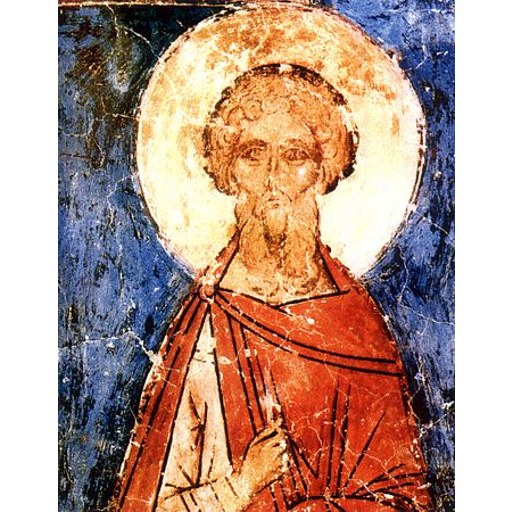
Unknown authorUnknown author
License: Public domain
Julian of Antioch
Saint- Feast Day
- 16 March
- Gender
- male
- Church
- Catholic
Places
Roles & Family
Canonization
Biography
Julian of Antioch, also called Julian of Anazarbus and often identified with the martyr known in the East as Julian of Tarsus or Julian of Cilicia, was a Christian martyr of the early fourth century. Tradition places his birth at Anazarbus, a prominent city of Roman Cilicia in southeastern Asia Minor. Later hagiographical texts describe him as a member of a senatorial family. Eastern synaxaria add that his father was a pagan and his mother a Christian, and that after his father’s death she brought him up in the faith, in some versions at Tarsus. No contemporary record preserves the year of his birth, and the picturesque family details belong to legend rather than to datable evidence. What can be said with confidence is that by the later fourth century the church of Antioch honored a Cilician martyr named Julian whose relics were believed to rest in the city.
The received account of his passion, known from Greek and Latin martyr acts of uncertain date, situates his arrest in the Great Persecution initiated under the emperor Diocletian. According to these acts he refused to sacrifice to the gods and was therefore subjected to a long series of tortures. He is said to have been led from town to town through Cilicia for as much as a year, scourged and otherwise abused. The climax of the legend is a distinctive death: Julian was sewn into a sack together with serpents, scorpions, or other venomous creatures—and, in some recensions, with sand—and was thrown into the sea. The Roman Martyrology, in its notice for 16 March, summarizes this tradition and associates the martyrdom with Anazarbus. Versions of the story differ as to the precise coastal site of the drowning and as to whether the body was first recovered near Alexandria or along the Cilician shore. None of these topographical details can be verified independently.
The strongest early witness to the cult is a homily of John Chrysostom, preached at Antioch in the last decades of the fourth century (commonly cited as In sanctum Julianum martyrem). Chrysostom’s panegyric shows that a shrine of the martyr already attracted veneration in the city and that the community regarded Julian as a powerful intercessor. Relics associated with him were therefore at Antioch by that time, which explains the epithet of Antioch even though his origin and death belong to Cilicia. In the Byzantine calendar a martyr Julian of Tarsus is celebrated on 21 June with a passion so similar—youthful senatorial convert, a year’s torment under a governor often named Marcian, death in a sack of beasts and sand—that modern hagiographers generally treat the Antiochene, Anazarbene, and Tarsian Julians as a single figure, while acknowledging that medieval lists are not wholly consistent about his native city.
Historically, almost nothing about Julian’s inner life, marital status, or exact year of death can be established. Conventional dates such as 305 place him within the Diocletianic persecution, but they are inferences, not documentary facts. He does not appear as a bishop, patriarch, or member of a religious order; the legends present him as a layman. Like other martyrs of the persecutions, he was venerated as a saint from late antiquity without a later papal canonization. His feast in the Roman tradition falls on 16 March; the corresponding Eastern commemoration is 21 June. He has not acquired a well-documented set of specialized patronages of places, trades, or maladies. The durable core of his memory is the Antiochene cult attested by Chrysostom, the drowning-in-the-sack motif preserved in East and West, and the liturgical celebration of a Cilician martyr named Julian from the fourth century onward.