Julius is a saint of the Catholic Church.
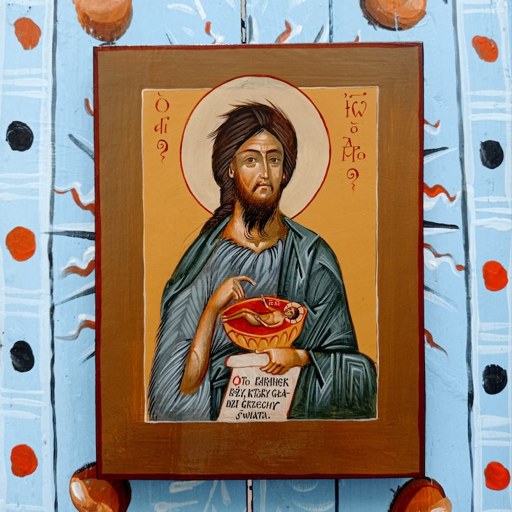
https://www.etsy.com/uk/listing/1518487637/saint-john-the-baptist-picture-icon
License: unknown
Julius
Saint- Gender
- male
- Church
- Catholic
Biography
The single name Julius is not enough to identify one historical person. In Christian hagiography and church history the name belongs to several distinct figures—popes, martyrs, and local saints—from late antiquity through the early modern period. Without a see, feast date, cognomen, century, or other qualifier, birth and death years, places, burial, office, order, family, canonization, and patronages cannot be assigned without conflating different men. The name itself is a Latin masculine praenomen; that is the only biographical attribute that can be stated with confidence for a subject identified only as Julius.
The best-attested ecclesiastical Julius of the patristic age is Pope Julius I, Bishop of Rome in the mid-fourth century. Contemporary and near-contemporary sources, including Athanasius and later papal catalogues, remember him for supporting Athanasius of Alexandria against Arian and imperial pressure and for asserting Rome’s role in disputed episcopal cases. His birth year and birthplace are not recorded in reliable sources; his death is placed in the mid-fourth century. Later liturgical tradition gave him an April feast, but he should not be treated as the default identity of every “Julius” in a martyrology or local calendar. Two Renaissance popes, Julius II (Giuliano della Rovere) and Julius III (Giovanni Maria Ciocchi del Monte), also bore the name; neither was canonized. Julius II is associated with the rebuilding of St. Peter’s and with patronage of Michelangelo; Julius III with the resumed Council of Trent. Their lives belong to political and artistic history rather than to the cult of saints.
Martyrological tradition preserves other men named Julius, especially soldiers and civilians of the third and fourth centuries. Among the more discussed is Julius the Veteran, linked to Durostorum on the lower Danube, whose Latin passion describes a long-serving soldier executed for refusing pagan sacrifice in the Diocletianic period. Hagiographers often treat that text as relatively sober compared with many later martyr acts, but even so it does not yield a verified birth year, family, or burial that could be applied to an unspecified Julius. Northern Italian tradition commemorates Julius of Novara (often paired with a companion Julian) as a late-antique missionary around Lake Orta; the core of that cult is local and the biographical detail is thin and partly legendary. Other Julii appear in the Roman Martyrology and in regional calendars with little more than a place of suffering and a feast.
Because these lives are not interchangeable, fields that require a unique documented individual—year of birth, year of death, cities and countries of birth and death, burial place, religious order, spouse, marriage, children, papal or patriarchal office, feast day, patronages, and names of those who beatified or canonized him—are left empty. Office-taking years must not be used as birth years; later pious expansions must not be treated as primary evidence. Anyone seeking a full dossier should specify which Julius is meant (for example Pope Julius I, Julius of Durostorum, or Julius of Novara). Until then, the responsible course is to record the name’s recurrence in Christian memory and to refuse a single fabricated biography.