Julius I is a saint of the Catholic Church (d. 352). Julius I's feast day is celebrated on 12 April.
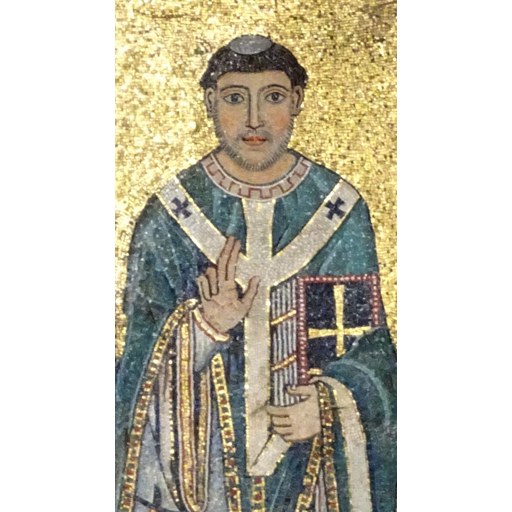
Hugo DK
License: CC BY-SA 4.0
Julius I
Saint- Life Span
- d. 352
- Feast Day
- 12 April
- Gender
- male
- Church
- Catholic
Places
Relics & Where to Venerate
Location unknown
The bodily remains of Julius I are a first-class relic. Venerated at Santa Maria in Trastevere.
Roles & Family
Biography
Julius I, a native of the city of Rome, served as Bishop of Rome from 337 until his death in 352. Surviving sources, including the Liber Pontificalis, identify him as Roman by birth (natione Romanus) but do not record the year of his birth or any reliable details of his family and early life. He succeeded Pope Mark after an interval of several months during which the Roman see stood vacant, and was consecrated in early 337. His pontificate unfolded in the immediate aftermath of Emperor Constantine I’s death, when the empire was divided among Constantine’s sons and the Church was still riven by the Arian controversy. Western and Eastern bishops were already drifting toward separate synodal practices, and imperial courts continued to intervene in episcopal depositions and restorations.
The defining work of Julius’s reign was his defense of Nicene bishops who had been condemned by Eastern synods dominated by Eusebian or Arian-leaning prelates. Athanasius of Alexandria, twice driven from his see, appealed to Rome, as did Marcellus of Ancyra. Julius convened a synod of Western bishops, generally dated to 340 or 341, which examined the charges and documentary evidence and acquitted both men. He then sent a substantial letter to the Eastern bishops assembled at Antioch. In it he protested that the Roman church had not been consulted before the depositions, recalled earlier custom by which Rome was informed in cases of major importance, and insisted that the accused had a right to a fair hearing. The letter is one of the principal fourth-century witnesses to a Roman claim of appellate authority, even though that claim was not accepted in the East.
A joint initiative of the emperors Constans and Constantius II produced the Council of Sardica (Serdica, modern Sofia), held about 343. Western bishops in communion with Julius confirmed the rehabilitation of Athanasius and adopted canons allowing a deposed bishop to appeal to the Bishop of Rome, who might order a new trial. Eastern bishops refused to sit with Athanasius, withdrew, and issued their own decrees. The Sardican canons were received in the West and later cited in support of papal jurisdiction, but they did not heal the division. Julius continued to support Athanasius in Rome until political circumstances, including the backing of Constans, allowed Athanasius to return to Alexandria in 346. Throughout these years Julius remained aligned with the Nicene party and declined to ratify Eastern depositions or Arianizing formularies.
Later Roman tradition, preserved in the Liber Pontificalis, attributes to Julius the building of two basilicas in the city—one in Trastevere, associated with the later church of Santa Maria in Trastevere, and the Basilica of the Twelve Apostles—as well as work connected with cemeteries. The same source ascribes to him regulations on clerical conduct and the keeping of church records; such notices for the early popes mix genuine memory with later reconstruction and must be used with caution. Julius died in Rome on 12 April 352 and was buried in the Cemetery of Calepodius on the Via Aurelia. His cult is ancient; the Roman Martyrology commemorates him on 12 April. He was succeeded by Pope Liberius. Relics associated with him were later translated to Santa Maria in Trastevere. His historical importance rests on his documented role in the Arian crisis and on the synod and letter that articulated a Roman claim to hear appeals from other churches.