Justus is a saint of the Catholic Church. Justus's feast day is celebrated on 10 November.
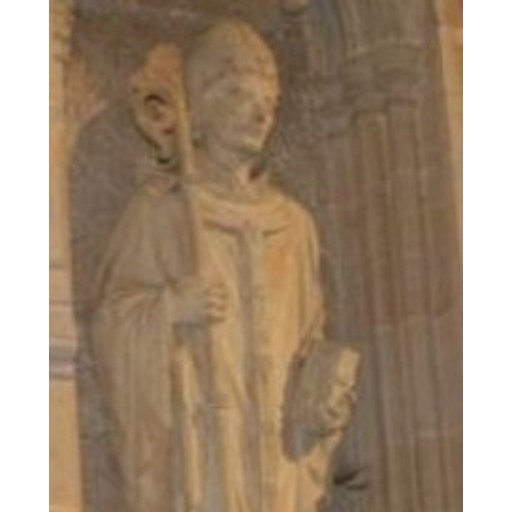
Secisek
License: CC BY-SA 3.0
Justus
Saint- Feast Day
- 10 November
- Gender
- male
- Church
- Catholic
Places
Relics & Where to Venerate
Location unknown
The bodily remains of Justus are a first-class relic. Venerated at St Augustine's Abbey.
Housed at Canterbury Cathedral · United Kingdom
In the 1090s, his remains were translated, or ritually moved, to a shrine beside the high altar of St Augustine's Abbey in Canterbury
Location unknown
After his death, he was revered as a saint and had a shrine in St Augustine's Abbey, Canterbury, to which his remains were translated in the 1090s
Roles & Family
Religious Information
Canonization
Biography
Justus was a monk of the late sixth and early seventh centuries who became the first Bishop of Rochester and subsequently the fourth Archbishop of Canterbury. Virtually nothing is recorded of his family, birth, or early career. He is known to have belonged to the community of Saint Andrew’s monastery on the Caelian Hill in Rome, a house founded by Pope Gregory the Great in his ancestral home, and he was selected for the Gregorian mission that sought to convert the pagan Anglo-Saxons of Britain. Most historians conclude that he reached Kent in 601 with the reinforcing party of missionaries that included Mellitus, bringing with them sacred vessels, vestments, relics, books, and a pallium for Augustine, the leader of the original expedition of 597.
In 604 Augustine established a second Kentish bishopric at Rochester and consecrated Justus as its first bishop. King Æthelberht of Kent provided land and built a cathedral church dedicated to Saint Andrew, a dedication that echoed the Roman monastery from which Justus had come. A land grant associated with Justus and Rochester is preserved in later medieval cartularies; scholars have questioned whether the surviving text is wholly authentic, but the existence of an endowed see at Rochester in Æthelberht’s reign is not in doubt. In 614 Justus left England long enough to attend a council of the Frankish church held at Paris under King Chlothar II, evidence that the new English church remained in communication with the churches of Gaul.
Æthelberht died in 616. His son Eadbald at first refused Christianity, and a pagan reaction followed. Bede relates that Justus and Mellitus, who was then Bishop of London, were expelled and fled across the Channel to Gaul, while Archbishop Laurence remained in Canterbury. After Eadbald’s conversion, Justus was recalled and restored to Rochester; Mellitus never regained London, whose people remained pagan. When Mellitus, who had become archbishop after Laurence’s death, himself died in 624, Justus was chosen as the fourth Archbishop of Canterbury. Pope Boniface V despatched the pallium to him together with a letter that survives in Bede, confirming his metropolitan authority and urging perseverance in the mission. Justus consecrated Romanus to succeed him at Rochester. He also consecrated Paulinus as bishop so that Paulinus might accompany Æthelburh, sister of Eadbald, to Northumbria on her marriage to King Edwin. That consecration, which Bede dates to 625, opened the Roman mission in the north and led to Edwin’s baptism.
Justus died on 10 November in a year that cannot be determined exactly. Because he was still in office when Paulinus was sent north, and because his successor Honorius was in place by the early 630s, historians place his death between 627 and 631. He was buried in the north porch of the church of Saints Peter and Paul outside the walls of Canterbury, the monastery later called Saint Augustine’s Abbey; in the later seventh or eighth century his relics were translated into the main church and enclosed in a shrine. He was venerated as a saint in England from an early date. His feast day is 10 November, recorded in the Roman Martyrology and observed in Anglican calendars. No contemporary Life exists. The narrative of his career depends almost entirely on Bede’s Ecclesiastical History, written about a century later, on a handful of papal letters, and on Canterbury’s later liturgical and historical traditions. Personal details—his age, appearance, spiritual writings, or inner character—are not preserved.