Kevin of Glendalough is a saint of the Catholic Church (d. 618). Kevin of Glendalough's feast day is celebrated on 3 June. Kevin of Glendalough is the patron saint of Glendalough;Dublin;County Wicklow;blackbirds.
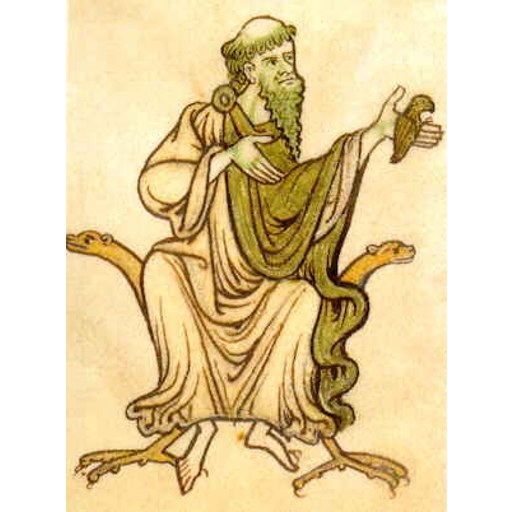
License: Public domain
Kevin of Glendalough
Saint- Life Span
- d. 618
- Feast Day
- 3 June
- Gender
- male
- Church
- Catholic
Places
Roles & Family
Patronage
Glendalough;Dublin;County Wicklow;blackbirds
Biography
Kevin of Glendalough, known in Irish as Caoimhín or Cóemgen and in Latin as Coemgenus, was an early medieval Irish hermit, monastic founder, and abbot associated with the valley of Glendalough (Gleann Dá Locha, the valley of the two lakes) in what is now County Wicklow. His historical outline is that of a Leinster monastic founder of the sixth and early seventh centuries; almost all narrative detail about him comes from later hagiography rather than from contemporary records. Tradition makes him a member of the Dál Messin Corb, a Leinster kindred, with a father named Coemlog and a mother named Coemell. Later lives place his birth in the late fifth century and his death in the early seventh. Irish annals record the repose of Cóemgen, abbot of Glenn dá Locha, under the year 618, which has become the conventional date of death. The same tradition claims that he lived one hundred and twenty years, a lifespan modelled on biblical and hagiographical convention and not a verifiable chronology; the frequently repeated birth year derived from that figure cannot be treated as historical. His name is commonly explained as meaning gentle birth or fair-begotten.
According to the medieval Lives, Kevin was baptized by a priest named Cronan and formed among monks, with some accounts connecting his education to Saint Petroc. He is said to have been ordained priest by a bishop named Lugidus (Lugaid). Seeking solitude, he withdrew to Glendalough and occupied a cave on the cliff above the Upper Lake still called St Kevin’s Bed, apparently a prehistoric rock-cut tomb reused as a hermit’s cell. There he lived an austere eremitical life. Disciples gathered around him, and the hermitage grew into a coenobitic monastery of which he became the first abbot. Glendalough developed into one of the principal monastic centres of early Christian Ireland, a monastic city with churches, a round tower, and a school, and it remained an important ecclesiastical site and place of pilgrimage through the high Middle Ages. Kevin is remembered as abbot rather than as a bishop; his authority was that of a monastic founder in the early Irish church.
The written Lives of Kevin were composed centuries after his death. Principal Latin recensions belong to the tenth to twelfth centuries, and they preserve a cycle of miracle stories that shaped his cult rather than a contemporary biography. The best-known episode describes a blackbird nesting in his outstretched hand as he prayed, the saint remaining motionless until the eggs hatched and the young birds fledged. Other tales include an otter that brought him fish, dealings with kings of Leinster, and a story of a woman who pursued him and whom, in some versions, he rejected harshly. These narratives belong to the common stock of Irish monastic hagiography and cannot be read as historical reportage, but they show how later communities remembered him as a model of patience, asceticism, and authority over the natural world. The Lives also place him in the company of other early Irish saints through visits and spiritual friendships, including a tradition of contact with Ciarán of Clonmacnoise.
Kevin’s feast is kept on 3 June. Irish martyrologies of the eighth and ninth centuries, including the Martyrology of Tallaght and the Félire Óengusso, already commemorate him, which shows that his cult was established well before the surviving Lives were written. He was never the subject of a formal papal canonization of the later medieval type; veneration grew from local monastic and diocesan practice and was later reflected in the Roman Martyrology. He is honoured as founder and patron of Glendalough and as a patron of Dublin and of County Wicklow, and popular devotion, drawing on the blackbird legend, also associates him with blackbirds.
The monastic city of Glendalough, traditionally regarded as Kevin’s foundation, became a diocesan centre and a noted place of pilgrimage. Its surviving monuments, including a round tower, several stone churches (among them the building popularly called St Kevin’s Kitchen), a gateway, and crosses, date mainly from the tenth to twelfth centuries, long after the founder’s lifetime, and illustrate the later wealth and status of the community that claimed him. Viking raids and, later, Anglo-Norman intervention affected the valley; the diocese of Glendalough was eventually united with Dublin. Medieval manuscripts preserve Latin and Irish lives of the saint, liturgical commemorations, and place-name lore tying caves, lakes, and churches in the valley to episodes in his legend. Historically, Kevin stands as one of the early Leinster monastic founders whose cult, already visible in eighth- and ninth-century martyrologies, was elaborated by later hagiographers into the figure of the hermit-abbot of the two lakes. Beyond that outline, the details of his biography rest on tradition rather than on contemporary documentation.