King Elesbaan is a saint of the Catholic Church. King Elesbaan's feast day is celebrated on 27 October.
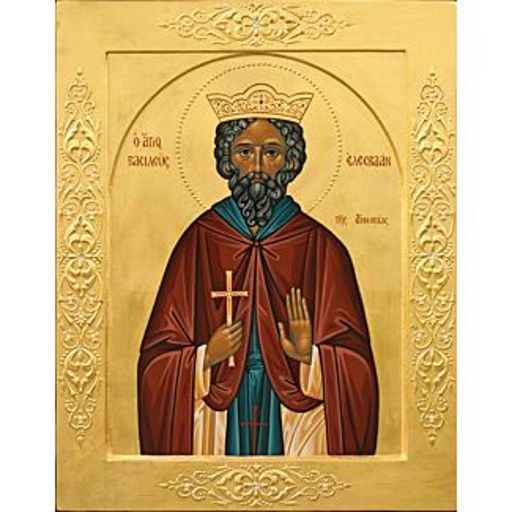
https://easternchristiansupply.biz/index.php/cse/catalog/product/view/id/3682/
License: unknown
King Elesbaan
Saint- Feast Day
- 27 October
- Gender
- male
- Church
- Catholic
Places
Roles & Family
Biography
King Elesbaan, known in Ge'ez sources as Kaleb and in Greek as Elesbaas or Elesboas (also Ella Asbeha), was a Christian ruler of the Kingdom of Aksum in the Horn of Africa during the early sixth century. Aksum at that time was a literate, coin-issuing state whose territory centered on the highlands of present-day Ethiopia and Eritrea and whose influence extended to the African and Arabian shores of the Red Sea. Elesbaan is one of the few Aksumite kings who can be correlated across indigenous inscriptions and coins, Byzantine historiography, Syriac martyr acts, and later Ethiopian royal and liturgical tradition. Writers such as Procopius, Cosmas Indicopleustes, and the compilers of the Martyrdom of Arethas present him as the Ethiopian monarch who answered appeals from persecuted Christians in South Arabia.
His principal recorded deed was the invasion of the Himyarite kingdom in Yemen. In the 520s the Himyarite king Yusuf As'ar Yath'ar, called Dhu Nuwas in later Arabic and Christian literature, adopted Judaism and carried out a violent suppression of Christian communities, most infamously the massacre at Najran in which the chief Arethas (al-Harith ibn Ka'b) and many companions were killed. Diplomatic and ecclesiastical networks brought news of the slaughter to the court of the Byzantine emperor Justin I and to Aksum. Elesbaan assembled a substantial fleet and army, crossed the Red Sea, and overthrew Dhu Nuwas, who according to the Christian narratives perished in the campaign. Aksum then installed a Christian Himyarite client, Sumyafa Ashwa (Esimiphaios in Procopius), though real power in Yemen later passed to the Aksumite general Abraha. The expedition is generally placed around the mid-520s and is among the best-attested military events of late antique Ethiopia.
Later Ethiopian tradition and the Western martyrological notice of Elesbaan add that the king did not end his life on the throne. After his victories he is said to have sent his crown to Jerusalem to be dedicated at the Church of the Holy Sepulchre, to have resigned royal power, and to have entered the monastic or eremitical life. Ethiopian king lists commonly name a son, Gabra Masqal (Gebre Meskel), as successor, though the reconstruction of the sixth-century Aksumite succession remains partly dependent on later chronicles. Modern historians treat the Himyarite war as historically secure while regarding the abdication and monastic retirement as pious tradition that cannot be confirmed from contemporary documents. Gold coins struck in Elesbaan's name, bearing Christian crosses and Greek or Ge'ez legends, independently attest his royal status and public profession of Christianity.
Elesbaan is venerated as a saint in the Catholic Church, where the Roman Martyrology commemorates him on 27 October as a king of Ethiopia who, after defeating the enemies of Christ, embraced monastic life. He is likewise honored in the Eastern Orthodox and Ethiopian Orthodox Tewahedo Churches as a defender of the Christian people of Najran and as one of the great kings of Aksum. No contemporary source records his year of birth or death; his activity belongs to the first half of the sixth century. His memory has been shaped both by the geopolitics of the Red Sea in late antiquity and by the later Ethiopian and Mediterranean cult of royal saints.