Lambert of Vence is a saint of the Catholic Church (1084 - 1154). Lambert of Vence's feast day is celebrated on 26 May. Lambert of Vence is the patron saint of Vence;Bauduen.
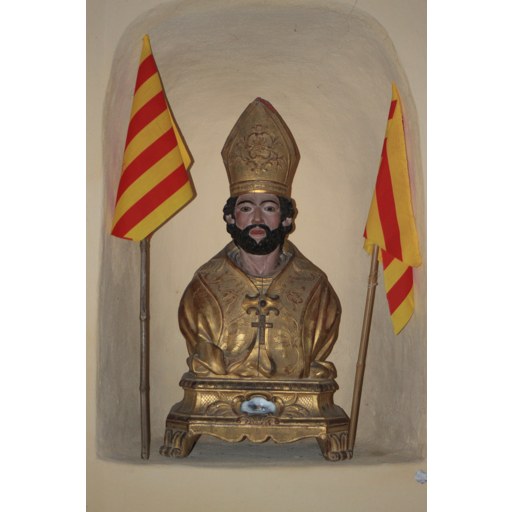
Llann Wé²
License: CC BY-SA 3.0
Lambert of Vence
Saint- Life Span
- 1084 - 1154 (age 70)
- Feast Day
- 26 May
- Gender
- male
- Church
- Catholic
Places
Roles & Family
Patronage
Vence;Bauduen
Biography
Lambert of Vence, also known as Lambert of Bauduen, was a twelfth-century bishop of the diocese of Vence in Provence, in what is now southeastern France. Traditional accounts place his birth in 1084 in the village of Bauduen, in the present-day department of Var. He is said to have lost his mother while still young and to have been raised thereafter among the canons of the cathedral church of Vence. The Provence of his youth was a politically fragmented region of the western Mediterranean, lying between Capetian France and the imperial sphere, and Vence itself was a modest episcopal city in the hinterland of the County of Provence. Little that is strictly contemporary survives concerning his family beyond the persistent association with Bauduen; later hagiography presents him as a youth of marked piety who was drawn early into the life of the local cathedral clergy.
After a period among the canons of Vence, Lambert withdrew to live as a hermit on the island of Saint-Honorat, one of the Lérins Islands off the coast near Cannes. Lérins had been a major monastic centre since the fifth century, and by Lambert’s time the abbey followed a Benedictine observance, though the sources describe his sojourn there in eremitical rather than clearly conventual terms. In 1114 the church of Vence chose him as bishop. He is portrayed as accepting the see with reluctance, in the conventional language of episcopal vitae, and was consecrated to a small, mountainous, and relatively poor diocese. His election belongs to the age of Gregorian reform, when cathedral chapters and local communities in Provence were increasingly expected to choose pastors of regular life, but the surviving record does not permit a detailed reconstruction of the politics of his appointment.
Lambert’s episcopate lasted some forty years, until his death in 1154. Medieval and early modern notices of his government stress pastoral care, personal austerity, and charity toward the poor, including relief in times of scarcity. Later tradition credits him with building or restoring churches and with close attention to the material needs of his flock, though documentary acts from his reign are sparse and the portrait of the saintly bishop is shaped by subsequent cult. Vence remained a modest see; a tenure of four decades would have given him unusual continuity in a period when Provençal bishoprics were often entangled with the ambitions of local lords and with the reform papacy. He died in Vence on 26 May 1154 and was buried in the cathedral.
Veneration of Lambert developed locally after his death. He was not the subject of a formal papal canonization of the later medieval or Tridentine type; his cult belongs to the older pattern of episcopal saints whose sanctity was recognized by popular devotion and liturgical commemoration within their own churches. His feast is kept on 26 May. He is honoured as patron of both Vence and his native Bauduen, and relics associated with him have been preserved in Vence Cathedral, dedicated to the Nativity of Mary. The historical record for Lambert is limited, as is typical for a provincial bishop of the early twelfth century whose life was not written by a contemporary of high literary ambition. The outline that later martyrologies and local tradition consistently transmit is that of a man born at Bauduen, formed among the clergy of Vence, tested as a hermit at Lérins, elected bishop in 1114, and dead in his see in 1154.