Lantbert von Lyon is a saint of the Catholic Church (d. 688). Lantbert von Lyon's feast day is celebrated on 14 April.
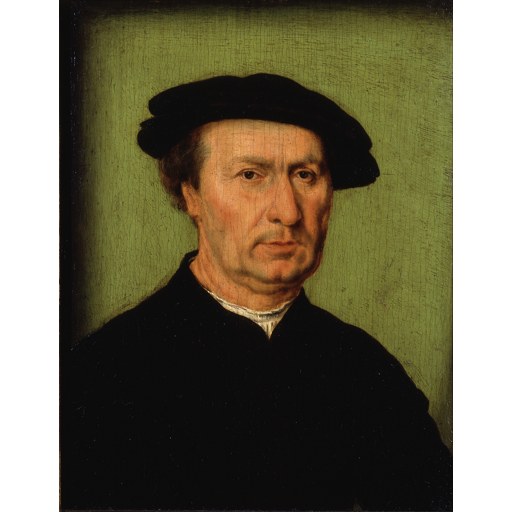
https://commons.wikimedia.org/wiki/Paintings_by_Corneille_de_Lyon
License: unknown
Lantbert von Lyon
Saint- Life Span
- d. 688
- Feast Day
- 14 April
- Gender
- male
- Church
- Catholic
Places
Roles & Family
Religious Information
Biography
Lantbert of Lyon, known in Latin as Landebertus and in French as Lambert de Lyon, was a seventh-century Frankish monk and bishop who became archbishop of Lyon in the later Merovingian age. Later tradition places his birth at Autun in Burgundy, among the regional nobility. No contemporary record preserves an exact year of birth; the figure sometimes given in modern notices is only a retrospective estimate. Like other young aristocrats of Neustria and Burgundy, he is said to have spent part of his youth at the Merovingian court, associated in the hagiographical tradition with the household of King Chlothar III. From that courtly setting he turned to the monastic life rather than to a secular career in royal service.
He entered the abbey of Fontenelle (later Saint-Wandrille) in the Seine valley of Neustria, a house founded in the mid-seventh century by Saint Wandregisel (Wandrille). Fontenelle followed a mixed Columbanian and Benedictine observance typical of the Frankish monasteries of that generation. Lantbert became a disciple of the founder and, after Wandregisel’s death in the late 660s, succeeded him as abbot. His abbacy belongs to the first decades of the community’s growth. In the later 670s he was taken from the cloister and appointed to the see of Lyon, then one of the principal churches of Gaul and a metropolitan centre with deep Roman and late-antique roots. Episcopal catalogues place the beginning of his pontificate around 678, in succession to Bishop Genesius.
As archbishop he governed Lyon until his death, which medieval and modern reference works date to 688. Almost nothing written in his own lifetime describes his administration. Later accounts, as is usual for monk-bishops of this period, credit him with pastoral seriousness and with the transfer of monastic habits of life into the episcopal household, but such notices cannot be controlled by independent evidence. He died at Lyon and was honoured there as a saint. Medieval martyrologies record his cult, and his feast is kept on 14 April, a date that in many early calendars coincides with the remembered day of death. He is a different person from Saint Lambert of Maastricht, a nearly contemporary bishop of the same name whose cult in the Low Countries became far more extensive.
The historical dossier is thin. Lantbert’s career is reconstructed from the lists of the bishops of Lyon, from the early history of Fontenelle, and from later vitae rather than from charters or narrative sources composed while he lived. Modern historians therefore accept as the most stable tradition his noble origin at Autun, his profession and abbacy at Fontenelle, and his translation to Lyon, while treating anecdotal and miraculous material with caution. He was never Bishop of Rome, nor patriarch of an Eastern see; his sanctity belongs to the pre-congregation cultus of the Frankish church, without a recorded papal act of canonization or beatification, and without a securely documented place of burial beyond the city of Lyon itself.