Laurian is a saint of the Catholic Church. Laurian's feast day is celebrated on 4 July. Laurian is the patron saint of Vatan.
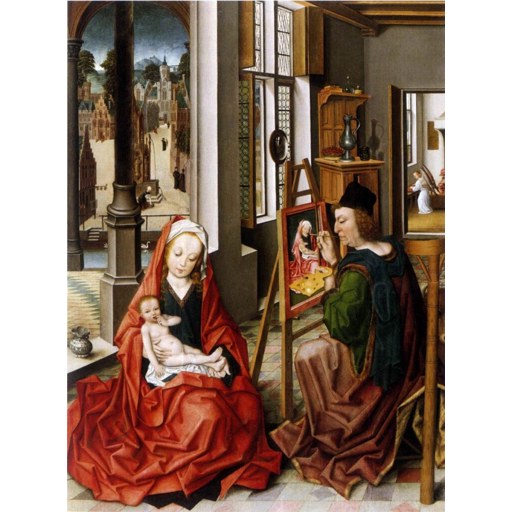
https://www.dailyartmagazine.com/saint-luke-the-ultimate-holy-painter/
License: unknown
Laurian
Saint- Feast Day
- 4 July
- Gender
- male
- Church
- Catholic
Places
Roles & Family
Patronage
Vatan
Biography
Saint Laurian, also known in Latin as Laurianus, is a Christian martyr and bishop commemorated in the Roman Martyrology on 4 July, where he is described as bishop of Seville who suffered in connection with Bourges. His cult is especially associated with the town of Vatan in the historic province of Berry in central France, and with the church that bears his name there. Almost everything told of his life comes from medieval hagiographical tradition rather than from documents contemporary with the events they purport to describe. Historians therefore treat the biographical particulars as legendary or at best uncertain, while acknowledging that a local cult of a martyr named Laurian or Laurianus took root in Berry and was later linked to the see of Seville.
According to the received legend, Laurian was born in Pannonia, a region later sources often identify with Hungary. He is said to have left his native land for the West, to have studied, and to have been received among the clergy of Seville in southern Hispania. In time, the story continues, he was chosen bishop, or archbishop, of that city. Independent episcopal lists and the better-attested sources for the church of Seville in late antiquity do not clearly confirm a bishop of this name in the fifth or sixth century, and the Seville connection may have been elaborated to explain the later presence of relics or to enhance the prestige of the cult.
The same tradition holds that Laurian subsequently journeyed into Gaul. In the territory of Berry he is said to have been arrested and put to death for the Christian faith, typically by beheading, at Vatan. Later writers often place this martyrdom in the mid-sixth century, sometimes specifying a year in the 540s, and sometimes attributing it to Arian Visigothic hostility. These dates and circumstances are not corroborated by contemporary chronicles. What is historically firmer is the medieval and modern veneration at Vatan: his body was believed to rest there, while some accounts claim that his head was conveyed to Seville. The parish church of Saint-Laurian at Vatan became the centre of his cult in France, and Bourges, as the metropolitan see of the region, appears in the martyrological notice.
Laurian was neither pope nor patriarch. No reliable source records a marriage or children; the hagiographical portrait is that of a bishop-martyr, not of a monk belonging to a later religious order. He was not the object of a formal papal canonization of the kind used in the second millennium; his feast belongs to the ancient veneration of martyrs. Locally he is regarded as patron of Vatan. Beyond that town and the liturgical commemoration on 4 July, claims about further patronages, a precise birthplace, or an exact year of birth or death cannot be verified from sources that meet a critical historical standard. The figure who emerges is thus a saint of regional importance whose legend joined Spain and Gaul, but whose life, in the strict sense, remains largely beyond recovery.