Lawrence of Brindisi is a saint of the Catholic Church (1559 - 1619). Lawrence of Brindisi's feast day is celebrated on 21 July. Lawrence of Brindisi is the patron saint of Brindisi.
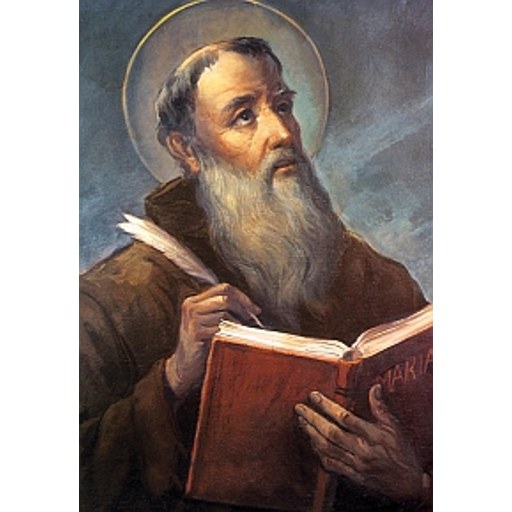
License: Public domain
Lawrence of Brindisi
Saint- Life Span
- 1559 - 1619 (age 60)
- Feast Day
- 21 July
- Gender
- male
- Church
- Catholic
Places
Roles & Family
Religious Information
Patronage
Brindisi
Canonization
Biography
Lawrence of Brindisi was born Giulio Cesare Russo on 22 July 1559 in Brindisi, then part of the Kingdom of Naples. His father, Guglielmo Russo (also recorded as Guglielmo de Rossi), belonged to a family of Venetian origin engaged in commerce, and his mother was Elisabetta Masella. Both parents died while he was still young, and he was placed in the care of an uncle. He received his early education with the Conventual Franciscans in Brindisi and later studied at St. Mark's College in Venice. In 1575, at the age of sixteen, he entered the Capuchin Franciscans at Verona and took the religious name Lorenzo. After the novitiate he pursued philosophy and theology, including studies associated with the University of Padua, and was ordained to the priesthood in 1582.
From the beginning of his priestly life he was noted as a preacher of unusual power and as a linguist of rare range. He acquired Latin, Greek, and Hebrew to a high degree of fluency, and he also used Syriac and several modern European languages. He preached to Jewish communities in Italy in Hebrew and employed the original languages of Scripture in controversy. Within the Capuchin order he rose quickly through offices of government, serving as provincial in Tuscany and in Venice and as definitor general. From 1602 to 1605 he was Minister General of the entire Capuchin order, travelling extensively to visit provinces, to enforce observance, and to encourage missions.
Lawrence took a prominent part in the Catholic response to Protestantism in the Holy Roman Empire and in the wars against the Ottoman Turks. In 1601 he served as chaplain to imperial troops in Hungary and was present at the campaign that recovered Székesfehérvár (Stuhlweissenburg) from Ottoman control; contemporary Catholic accounts describe him as encouraging the soldiers and carrying a crucifix among them. In subsequent years he worked in Bohemia, Austria, and other German lands at the request of the papacy and of Habsburg rulers, preaching, advising Catholic princes, and helping to establish or strengthen Capuchin houses as centres of reform. He combined this public activity with a large output of sermons and treatises, including Marian homilies later collected as the Mariale, a commentary on Genesis, and polemical works against Lutheran teaching.
His last years were occupied with diplomacy as well as with religious government. The citizens of Naples, suffering under a harsh Spanish viceroyalty, asked him to intercede with King Philip III. He travelled to the Iberian Peninsula and found the court at Lisbon, where Portugal was then united to the Spanish crown. There he fell ill and died on 22 July 1619, the sixtieth anniversary of his birth. His remains were later taken to Villafranca del Bierzo in Spain and buried at the convent of the Poor Clares. Devotion to him spread in the Capuchin order and in southern Italy. Pope Pius VI beatified him in 1783; Pope Leo XIII canonized him in 1881; and Pope John XXIII declared him a Doctor of the Church in 1959, in recognition of his preaching, his mastery of Scripture, and his service to the Church in a time of religious conflict. His feast is observed on 21 July.