Lebuinus is a saint of the Catholic Church (d. 773). Lebuinus's feast day is celebrated on 12 November. Lebuinus is the patron saint of Deventer.
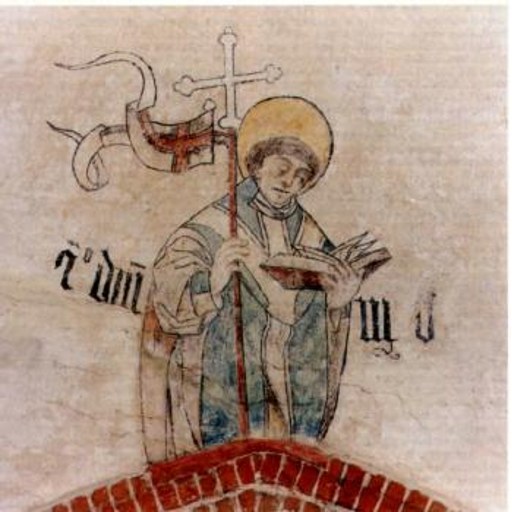
Unknown authorUnknown author
License: Public domain
Lebuinus
Saint- Life Span
- d. 773
- Feast Day
- 12 November
- Gender
- male
- Church
- Catholic
Places
Roles & Family
Religious Information
Patronage
Deventer
Biography
Lebuinus, whose name appears in the sources also as Lebuin, Liafwin, and Leafwine, was an eighth-century Anglo-Saxon priest and missionary. Neither the year nor the exact place of his birth in England is recorded. He is associated with the monastery of Ripon in Northumbria, where he is said to have been formed in the monastic life and ordained priest. Ripon had been founded under the influence of Saint Wilfrid and observed a Benedictine pattern of observance. Like other English churchmen of his generation, Lebuinus was drawn to the continental missions that followed the work of Willibrord and Boniface among the Frisians and Saxons.
In the middle decades of the eighth century he travelled to the Low Countries and was received at Utrecht by Saint Gregory, abbot and administrator of the missionary church there after the death of Boniface. Gregory directed him toward the eastern frontier of Frisia, along the river IJssel. Lebuinus first built a small wooden church at Wilp on the western bank. He then established a more substantial church at Deventer on the eastern bank, where a handful of Christians were already living. Deventer became the principal seat of his activity. From there he preached among both Frisians and the neighboring Saxons, who remained largely pagan and politically independent of the Frankish kingdom.
The early Life of Lebuinus recounts that he attended the great Saxon assembly at Marklo, near the Weser. Clad in liturgical vestments and carrying a cross and the book of the Gospels, he addressed the gathered nobles, calling them to abandon their gods and accept baptism, and warning of the power of the Christian God. The assembly was divided; some demanded his death, but an elder named Buto argued that a messenger of so powerful a deity should not be killed. Lebuinus was allowed to depart. Not long afterward Saxon raiders burned the church at Deventer. Lebuinus returned, rebuilt it, and resumed his ministry.
He died at Deventer, according to later tradition in 773, and was buried in his own church. Veneration of his tomb began soon after. In the ninth century an anonymous author composed the Vita Lebuini antiqua, the chief narrative source for his career. A later, more elaborate life also circulated. The medieval church of Saint Lebuinus at Deventer, rebuilt in Romanesque and then Gothic form, became the collegiate church of the town and the focus of his cult. Lebuinus is commemorated on 12 November and is honored as the patron saint of Deventer. No record of a papal canonization survives; his sainthood belongs to the early medieval pattern of local episcopal and popular recognition.