Leonardo Castellanos y Castellanos is a venerable of the Catholic Church (1862 - 1912).
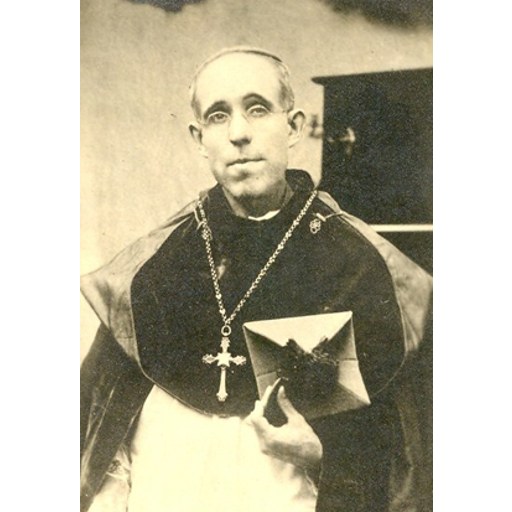
Unknown authorUnknown author
License: Public domain
Leonardo Castellanos y Castellanos
Venerable- Life Span
- 1862 - 1912 (age 50)
- Gender
- male
- Church
- Catholic
Places
Roles & Family
Biography
Leonardo Castellanos y Castellanos was a Mexican Roman Catholic bishop of the early twentieth century, known principally for a short tenure as Bishop of Tabasco. He was born on 6 November 1862 in Ecuandureo, in the state of Michoacán. He was formed at the Conciliar Seminary of Morelia and ordained a priest for the Archdiocese of Michoacán on 20 March 1886. In the following years he served as a seminary professor, as parish priest of Puruándiro, and as a canon of the metropolitan cathedral of Morelia, positions that placed him among the senior clergy of Archbishop Atenógenes Silva y Álvarez Tostado.
On 21 September 1908 Pope Pius X appointed him Bishop of Tabasco. He received episcopal consecration in the cathedral of Morelia on 27 December 1908 from Archbishop Silva and took possession of his see in January 1909. The Diocese of Tabasco, erected in 1880 with its seat at San Juan Bautista (later Villahermosa), covered a humid Gulf-coast territory of rivers, jungle, and scattered settlements, and it suffered from a shortage of priests. Castellanos devoted his brief administration to pastoral work, the promotion of Catholic schooling, and efforts to organize clerical formation for a local clergy.
He died in Villahermosa on 19 May 1912 at the age of forty-nine, after little more than three years as bishop. His death came as the Mexican Revolution was entering a more destructive phase that would later bring intense trials for the Church in Tabasco. He was a secular (diocesan) priest and bishop, not a member of a religious order. He was not beatified or canonized, and he has no feast in the general Roman calendar. He remains a figure of regional ecclesiastical history in Michoacán and Tabasco rather than of widespread cult.
Surviving notices of his life come mainly from diocesan catalogues, standard episcopal directories, and local Mexican church histories. Later bishops of Tabasco inherited a diocese that would face confiscation of churches and exile of clergy in the 1920s and 1930s, a context in which local historians have sometimes presented Castellanos as a representative of the last relatively peaceful pre-revolutionary pastoral era in that see.