Léonie Martin is a venerable of the Catholic Church (1863 - 1941).
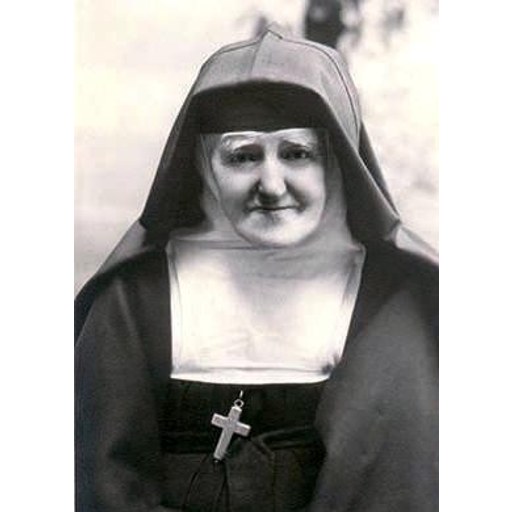
Unknown authorUnknown author
License: Public domain
Léonie Martin
Venerable- Life Span
- 1863 - 1941 (age 78)
- Gender
- female
- Church
- Catholic
Places
Roles & Family
Religious Information
Biography
Marie Léonie Martin was born on 3 June 1863 in Alençon, in Normandy, France, the third surviving daughter of Louis Martin, a watchmaker, and Azélie-Marie Guérin, a lacemaker. The couple, later canonized jointly by Pope Francis in 2015, had nine children, of whom four died in early childhood. The five daughters who reached adulthood—Marie, Pauline, Léonie, Céline, and Thérèse—all entered religious life. Léonie was baptized the day after her birth. From early childhood she suffered from poor health, including chronic eczema and intestinal troubles, and was regarded as less intellectually able and more difficult in temperament than her sisters. Her mother found her particularly hard to manage and at times despaired of her future.
After unsuccessful periods at boarding school with the Visitandines of Le Mans, where her aunt Sister Marie-Dosithée was a nun, Léonie returned home. Zélie Martin died of breast cancer in August 1877, when Léonie was fourteen. Louis Martin then moved the family to Lisieux to live near Zélie's brother, Isidore Guérin. In Lisieux Léonie continued to struggle with formation and vocation. She made a brief and unsuccessful attempt to join the Poor Clares of Alençon in 1886. She entered the Monastery of the Visitation in Caen in July 1887 but left in January 1888. A second trial of the same community, beginning in 1893, likewise ended in her departure in 1895. During these years her youngest sister Thérèse entered the Carmel of Lisieux (1888) and later wrote the autobiographical manuscripts that became Story of a Soul.
After the death of Louis Martin in 1894 and the publication of Thérèse's writings following Thérèse's death in 1897, Léonie found in her sister's Little Way of spiritual childhood a path that suited her own limitations and desires. She entered the Visitation Monastery of Caen for the third time on 28 January 1899, taking the name Sister Françoise-Thérèse. She made her perpetual profession on 2 July 1900 and remained in that community for the rest of her life. Her correspondence with her Carmelite sisters in Lisieux shows a simple, affectionate, and increasingly peaceful religious life marked by humility and fidelity rather than by notable office or public influence.
Sister Françoise-Thérèse died at the Visitation Monastery in Caen on 12 June 1941, during the German occupation of France, at the age of seventy-eight. She was buried at the monastery. In the early twenty-first century the Diocese of Bayeux-Lisieux opened a cause for her beatification, and she is invoked as a Servant of God. She has not been beatified or canonized. Her life is often presented as an example of perseverance in vocation and of the sanctification of an ordinary, imperfect temperament through the spirituality associated with her sister Thérèse of Lisieux.