Leontius the Myroblyte is a venerable of the Catholic Church.
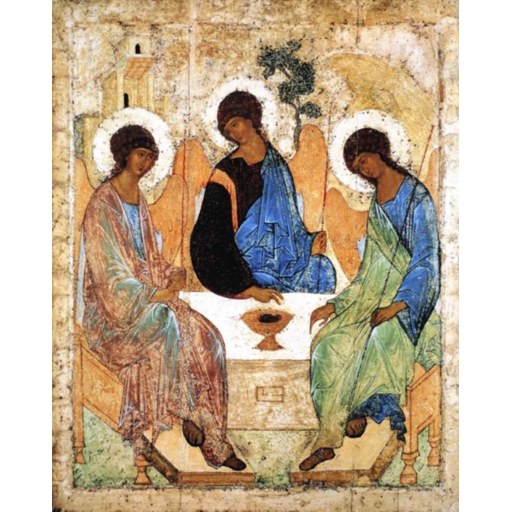
https://iconsofsaints.com/products/saint-great-martyr-demetrius-of-thessaloniki-or-demetrios-the-myroblyte-wooden-orthodox-icon
License: unknown
Leontius the Myroblyte
Venerable- Gender
- male
- Church
- Catholic
Roles & Family
Biography
Leontius the Myroblyte is known in Eastern Christian hagiography by an epithet derived from the Greek μυροβλύτης, meaning one whose relics exude myrrh. This designation places him among a distinctive class of saints in the Orthodox tradition whose tombs or incorrupt bodies were believed to produce a fragrant, oil-like substance used for blessing and healing. Beyond the epithet itself, a securely documented biography cannot be reconstructed from standard historical and hagiographical references. He must be distinguished from several better-attested figures who bore the same given name, including the martyr Leontius of Tripoli, the Cypriot bishop and hagiographer Leontius of Neapolis in the seventh century, the sixth-century theologian Leontius of Byzantium, and Leontius II, Greek Orthodox Patriarch of Jerusalem in the later twelfth century. None of these can be identified with certainty as the Myroblyte without additional evidence that is not available in reliable general sources.
The cult of myroblyte saints flourished especially in the Byzantine and post-Byzantine Orthodox world. Relics that streamed myrrh attracted pilgrims, generated liturgical texts, and often became the focus of monastic or civic identity. Well-known examples include Saint Demetrius of Thessaloniki, Saint Nicholas of Myra, Saint Symeon the Myrrh-gusher (Stefan Nemanja) at Hilandar, and Athonite figures such as Saint Nilus the Myrrh-gusher. The phenomenon is typically associated with monastic holiness and with the belief that divine grace continued to operate through the saint’s remains. In the absence of a dated vita, a unique feast day that can be isolated from those of homonymous saints, or a clearly localized shrine, it is not possible to assign Leontius the Myroblyte to a particular century, monastery, or region without speculation.
Local traditions in the Greek-speaking world, on Mount Athos, or in the Balkans may have preserved memory of an ascetic named Leontius whose tomb produced myrrh, and such a cult would ordinarily have involved the collection of the exudation, the composition of a liturgical office, and perhaps the translation of relics. Those details, if they exist in unpublished synaxaria, monastery archives, or regional church histories, have not been corroborated here from independent, widely available historical sources. Orthodox recognition of saints in this milieu often proceeded by popular veneration and episcopal or patriarchal acknowledgment rather than by a process comparable to later Latin beatification and canonization, so the names of any formal recognizers are likewise unrecorded in accessible literature.
Because the subject is obscure, the prudent historical account is limited to what the epithet itself reliably indicates: that an Eastern Christian holy man named Leontius was venerated after death as a source of miraculous myrrh. Dates of birth and death, places of origin and burial, monastic affiliation, and specific patronages remain unknown. Further research in liturgical manuscripts, Athonite or island monastery records, and specialized hagiographical catalogues would be required to identify him more closely and to avoid confusion with the many other saints and hierarchs named Leontius.