Lorcán Ua Tuathail is a saint of the Catholic Church (1128 - 1180). Lorcán Ua Tuathail's feast day is celebrated on 14 November. Lorcán Ua Tuathail is the patron saint of Dublin;Archdiocese of Dublin.
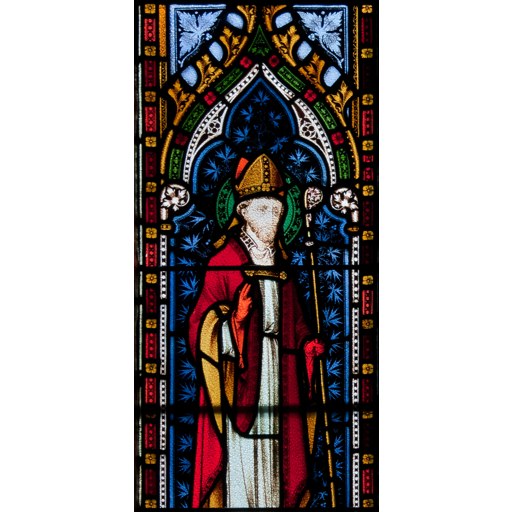
Andreas F. Borchert
License: CC BY-SA 4.0
Lorcán Ua Tuathail
Saint- Life Span
- 1128 - 1180 (age 52)
- Feast Day
- 14 November
- Gender
- male
- Church
- Catholic
Places
Relics & Where to Venerate
Housed at Christ Church Cathedral · United States
Lorcán's heart was returned to Ireland and is preserved in a reliquary in Christ Church Cathedral, Dublin
Roles & Family
Religious Information
Patronage
Dublin;Archdiocese of Dublin
Canonization
Biography
Lorcán Ua Tuathail, known in English as Saint Laurence O’Toole, was born in 1128 at Castledermot in County Kildare, in the kingdom of Leinster in Ireland. He belonged to the Uí Muiredaig, a leading lineage of the Uí Dúnlainge of north Leinster; his father Muirchertach Ua Tuathail was king of that territory. As a child he was given as a hostage to Diarmait Mac Murchada, king of Leinster, during a period of dynastic conflict, and contemporary tradition records that he was treated harshly while in captivity. After about two years his father obtained his release on the condition that the boy be educated at the monastery of Glendalough in the Wicklow Mountains. There he received a monastic formation in the Irish tradition and in time took vows as a monk.
While still a young man, in the mid-twelfth century, he was chosen abbot of Glendalough and administered the monastery and its dependent churches and lands. He acquired a reputation for personal austerity and for care of the poor and of pilgrims. In 1162 the clergy and people of Dublin elected him archbishop, the first native Irishman to hold that see, which had previously been closely associated with the Norse city of Dublin and with the English church at Canterbury. He was consecrated by Gilla meic Liac (Gelasius), archbishop of Armagh. As archbishop he introduced the rule of the Canons Regular of Saint Augustine at Christ Church Cathedral, lived under a strict personal discipline that included fasting and a hair shirt, and worked to bring the diocese into closer conformity with the reforming programme of the contemporary Latin church.
The Anglo-Norman intervention in Ireland from 1169, led in part by Diarmait Mac Murchada and later backed by Henry II of England, placed Lorcán in a difficult political position. He sought to protect the Irish church and the people of Dublin while also acting as a mediator among Irish kings, the new Anglo-Norman lords, and the English crown. He took part in the Synod of Cashel in 1172, which acknowledged Henry II’s claims in ecclesiastical matters, and he later travelled to England and to the continent on diplomatic missions. During outbreaks of violence around Dublin he is recorded as having tried to ransom captives and to arrange truces. In 1179 he attended the Third Lateran Council in Rome; Pope Alexander III named him papal legate for Ireland, which strengthened his authority to promote reform among the Irish bishops.
In 1180 he again crossed to England in an effort to negotiate between Ruaidrí Ua Conchobair, the high king of Ireland, and Henry II. The king would not permit him to return to Dublin. Lorcán followed the royal court into Normandy, fell ill at the Augustinian abbey of Eu, and died there on 14 November 1180. He was buried in the abbey church at Eu; his heart was later enshrined at Christ Church Cathedral in Dublin. Devotion to him grew quickly in Normandy and in Ireland. He was canonized by Pope Honorius III in 1225. His feast is kept on 14 November, and he is venerated as the patron saint of Dublin and of the Archdiocese of Dublin.