Maccabee is a saint of the Catholic Church (d. -160).
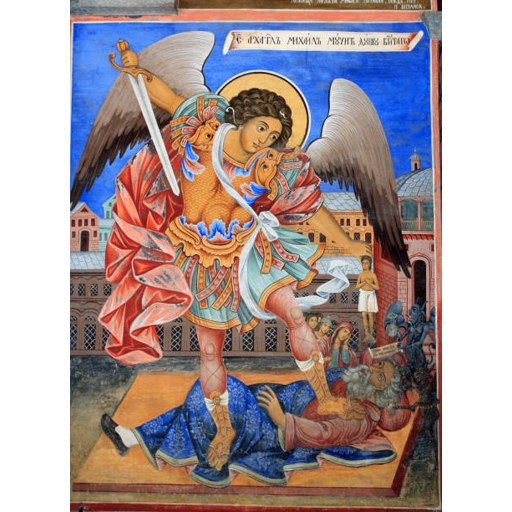
https://gettyimages.com/photos/saint-michael-painting
License: unknown
Maccabee
Saint- Life Span
- d. -160
- Gender
- male
- Church
- Catholic
Places
Roles & Family
Biography
The name Maccabee is most closely associated with Judas Maccabeus (Judah Maccabee), the principal military leader of the Jewish revolt against Seleucid rule in Judea in the second century BCE. He was a son of Mattathias, a priest of the course of Jehoiarib. According to 1 Maccabees, Mattathias was connected with Jerusalem and lived at Modein, where the revolt began; ancient sources do not record Judas’s year or exact place of birth. The epithet Maccabee, later applied to his brothers and to the movement as a whole, is commonly linked to a word meaning hammer, but that etymology is not certain. After the death of Mattathias, Judas took command of the insurgency that had started in resistance to the religious policy of Antiochus IV Epiphanes.
Under Judas the rebels defeated a succession of Seleucid detachments and allied forces. First Maccabees associates these victories with sites including Beth-horon, Emmaus, and Beth-zur. The campaign made possible the recapture of the Temple mount in Jerusalem, the removal of the altar that had been profaned, and the rededication of the sanctuary, dated in the sources to 164 BCE and later remembered in the festival of Hanukkah. Judas also led expeditions into neighboring districts to relieve Jewish populations. The principal accounts are 1 Maccabees and 2 Maccabees, which differ in outlook and detail; they are not modern critical biographies, and reconstruction of events depends on them together with later historians such as Josephus.
Seleucid armies returned to Judea after the death of Antiochus IV. Judas is reported to have sent envoys to Rome and to have obtained a treaty of friendship, but Roman diplomatic recognition did not halt the war. In 160 BCE he was killed fighting the Seleucid general Bacchides at Elasa. First Maccabees records that Jonathan and Simon recovered their brother’s body and buried him in the ancestral tomb at Modein.
No contemporary source documents a wife or children of Judas; leadership of the Hasmonean house passed to his brothers Jonathan and then Simon. In Jewish tradition he remains the central figure of the revolt that restored Temple worship. In Christian hagiography the name Maccabee more often denotes a separate group, the seven brothers, their mother, and Eleazar the scribe of 2 Maccabees 7, long venerated as martyrs, with a feast on 1 August in the Roman Martyrology and in Eastern Orthodox usage. Judas himself was not the focus of that martyr cult, although medieval Christian authors sometimes celebrated him as a model of armed faith and included him among the Nine Worthies. His birth year is unknown, and legendary accretions should be distinguished from the second-century BCE narrative books.