Margalida Amengual i Campaner is a venerable of the Catholic Church (1888 - 1919).
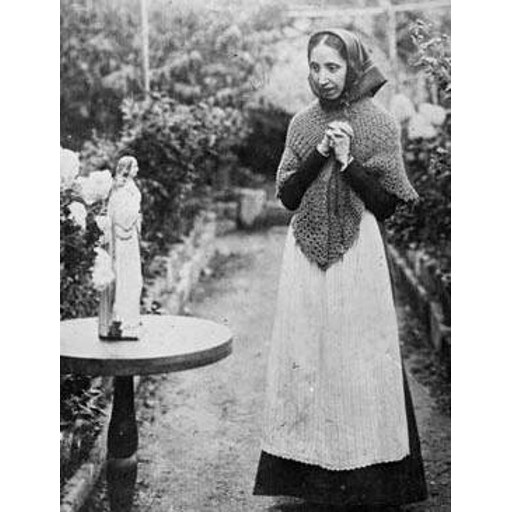
Carles Fargas
License: Public domain
Margalida Amengual i Campaner
Venerable- Life Span
- 1888 - 1919 (age 31)
- Gender
- female
- Church
- Catholic
Places
Roles & Family
Biography
Margalida Amengual i Campaner was a Mallorcan Catholic laywoman born on 9 September 1888 in Costitx, a small agricultural municipality in the Pla de Mallorca in the interior of the island of Mallorca, then part of the Kingdom of Spain. She came from a modest peasant family and grew up amid the rural parish Catholicism typical of late nineteenth-century Mallorca. Like many women of her class and place she received little formal schooling and spent her life in household work, farm labor, and the ordinary round of village religious practice. She remained in Costitx throughout her life and never entered a convent.
She did not marry. Local memory and later testimonies gathered for an ecclesiastical cause present her as a woman of hidden, intense piety: frequent prayer, devotion to the Eucharist and to the Virgin Mary, charity toward neighbors, and patience in illness. She is commonly described as a mystic, though the precise nature of any extraordinary graces attributed to her belongs to popular tradition and to an unfinished canonical process rather than to a fully published critical dossier. She lived as a consecrated single layperson in the world rather than as a member of a religious institute whose affiliation can be firmly documented from readily verified sources.
Margalida died in Costitx on 30 January 1919, at the age of thirty. Her early death and the reputation for holiness she had already acquired among her neighbors gave rise to an immediate popular cult. People of Costitx and of other Mallorcan towns visited her grave, asked her intercession, and spoke of her as a “beata” in the older popular sense of a holy woman. Her memory remained tied to her native parish, which became the center of this local devotion.
In the later twentieth century the Diocese of Mallorca took steps toward a formal cause of beatification, and she is designated a Servant of God. She has not been beatified or canonized by the Holy See, and she has no universally assigned feast day or official list of patronages. What can be stated with confidence is that she is remembered on Mallorca as a short-lived rural laywoman whose simplicity, prayer, and charity left a lasting impression of holiness in her own village and island.