Margaret of Brabant is a blessed of the Catholic Church (1276 - 1311).
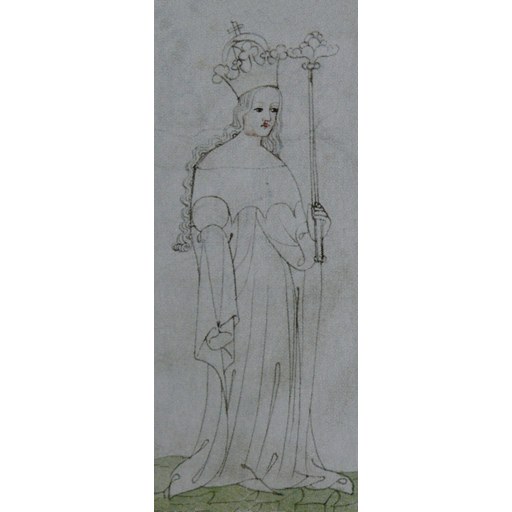
AnonymousUnknown author
License: Public domain
Margaret of Brabant
Blessed- Life Span
- 1276 - 1311 (age 35)
- Gender
- female
- Church
- Catholic
Places
Relics & Where to Venerate
Location unknown
The bodily remains of Margaret of Brabant are a first-class relic. Venerated at San Francesco di Castelletto.
Roles & Family
Religious Information
Biography
Margaret of Brabant was born in 1276, a daughter of John I, Duke of Brabant, and of Margaret of Flanders, herself a daughter of Guy of Dampierre, Count of Flanders. She belonged to the ducal house that ruled one of the wealthiest principalities of the Low Countries within the Holy Roman Empire. In 1288 her father won the Battle of Worringen, a victory that secured Brabant’s hold on Limburg and in which Henry VI, Count of Luxembourg, was killed. The later marriage of Margaret to that count’s heir, Henry of Luxembourg, belonged to the political settlement that followed the war. The wedding was celebrated in 1292 at Tervuren, a residence of the dukes of Brabant, and joined the Brabantine dynasty to a still modest comital house of the Ardennes.
Margaret and Henry had three children who later occupied central places in fourteenth-century dynastic politics. Their son John, born in 1296 and afterward known as John the Blind, became Count of Luxembourg and King of Bohemia and was killed at the Battle of Crécy in 1346. Their daughter Marie married King Charles IV of France. Their daughter Beatrix married King Charles I of Hungary. For many years Margaret’s standing was that of countess of Luxembourg. After the assassination of King Albert I of Germany in 1308, the German princes elected Henry King of the Romans in November of that year. Margaret thereby became queen. Henry was crowned at Aachen in January 1309.
Henry then sought the imperial crown in Italy, and Margaret accompanied him when he crossed the Alps in 1310. In January 1311 he was crowned King of Italy at Milan; in June 1311 he was crowned Holy Roman Emperor in Rome. During the Italian expedition Margaret fell ill at Genoa. She died there on 14 December 1311, a few months after her husband’s imperial coronation. She did not live to see the failure of his remaining Italian plans or his own death in Tuscany in 1313. Through her son John she became the ancestress of the later Luxembourg kings and emperors.
Margaret was buried in the Franciscan church of San Francesco di Castelletto in Genoa. Henry commissioned the sculptor Giovanni Pisano to execute a monumental tomb for her, a major work of early fourteenth-century Gothic funerary sculpture. The church was later demolished, and only fragments of the monument survive, principally in Genoese collections. Margaret is remembered in political and art-historical literature as Queen of the Romans, wife of Emperor Henry VII, and mother of John of Luxembourg. She is not recorded as a canonized or beatified saint in the principal calendars of the Catholic Church, and no verified feast day or patronage is attached to her name.