Maria Assunta Pallotta is a blessed of the Catholic Church (1878 - 1905). Maria Assunta Pallotta's feast day is celebrated on 7 April.
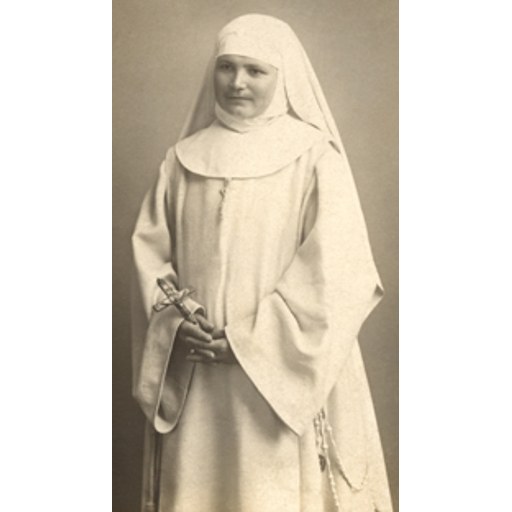
AnonymousUnknown author
License: Public domain
Maria Assunta Pallotta
Blessed- Life Span
- 1878 - 1905 (age 27)
- Feast Day
- 7 April
- Gender
- female
- Church
- Catholic
Places
Roles & Family
Religious Information
Canonization
Biography
Maria Assunta Pallotta was born on 20 August 1878 in Force, a hill town in the province of Ascoli Piceno in the Marche region of central Italy, then part of the Kingdom of Italy. She came from a poor peasant household and grew up amid the material hardship typical of rural life in that region in the late nineteenth century. She received little formal schooling and from a young age worked to help support her family, including as a domestic servant. The Catholic practice of her parish and family shaped her early years. Those who later gave evidence about her youth described a girl of modest demeanor, industrious habits, and sincere piety, not of unusual learning or social standing.
In her late teens she sought admission to religious life and entered the Franciscan Missionaries of Mary, a congregation founded in 1877 by Hélène de Chappotin (Mother Mary of the Passion). The institute joined a Franciscan spiritual tradition to an apostolate of foreign missions and service to the poor. Pallotta completed her formation in Italy and professed her vows. She then served in ordinary domestic and kitchen duties in the congregation’s Italian houses, work that matched both her background and the institute’s emphasis on simplicity. She asked to be sent on the missions. In 1904 her superiors assigned her to China, and she traveled to Shanxi in the north of the country.
Shanxi had recently suffered the anti-Christian violence of the Boxer Rebellion of 1900, in which the vicar apostolic, Franciscan friars, seminarians, and a group of Franciscan Missionaries of Mary were killed at Taiyuan. The mission was being re-established when Pallotta arrived. She was stationed at Tong-Eul-Keou, where she continued the humble tasks she had done in Italy: cooking, household work, and assistance with orphans and the poor attached to the mission. She did not hold office as a superior or as a teacher of advanced subjects. Contemporary descriptions stress her obedience, charity, and fidelity to the religious rule rather than public prominence.
In 1905 a typhus epidemic struck the mission. Pallotta tended the sick and herself contracted the disease. She died on 7 April 1905 at the age of twenty-six. Accounts of a fragrance associated with her body and of a peaceful death circulated among the sisters and local Christians. Her remains were later exhumed and were reported to have been found incorrupt, which encouraged devotion to her memory. A canonical process followed, and Pope Pius XII beatified her on 7 November 1954. She has not been canonized. Her feast is observed on 7 April. She is remembered especially by the Franciscan Missionaries of Mary and in her native Marche as an example of missionary religious life lived in obscurity and cut short by illness.