Maria Bonardi is a venerable of the Catholic Church (1864 - 1932).
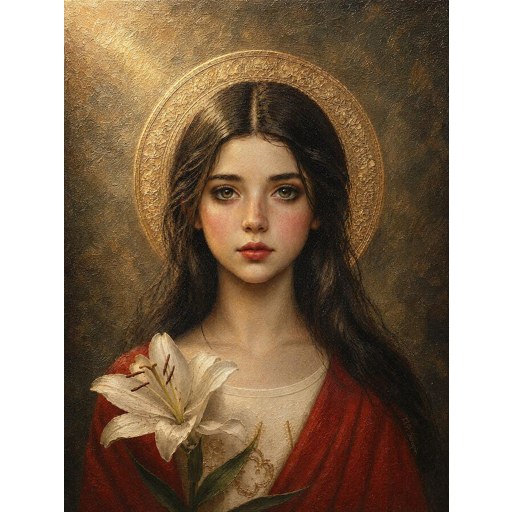
https://mp-serapin.pixels.com/featured/saint-maria-goretti-portrait-catholic-fine-art-print-mp-serapin.html
License: unknown
Maria Bonardi
Venerable- Life Span
- 1864 - 1932 (age 68)
- Gender
- female
- Church
- Catholic
Places
Roles & Family
Religious Information
Biography
Maria Bonardi was an Italian Roman Catholic religious sister and foundress active in the late nineteenth and early twentieth centuries. She was born in 1864 in Castelnuovo Scrivia, in the province of Alessandria in Piedmont, northern Italy, in the decades after national unification, when the Church was adapting its educational and charitable work to a changed political order. Surviving accounts present her as a woman of piety who chose an active apostolate rather than cloistered life, though independent documentation of her family background and early formation remains limited.
In the closing years of the nineteenth century she founded the Congregation of the Sisters of Santa Maria of Loreto, placing the community under the patronage of Our Lady of Loreto, whose Holy House in the Marche was among Italy’s principal Marian shrines. The sisters undertook teaching, especially of girls and young women, catechesis, and care of the poor and sick, working mainly in rural and small-town settings in northern Italy. As foundress and first superior, Bonardi sought ecclesiastical recognition for the institute and formed its members in a spirituality of Marian devotion, simplicity, and practical charity.
She spent her later years directing the congregation’s modest growth and sharing its labors. According to available Italian Catholic notices she died in 1932 in Turin, where the sisters had a house. Precise circumstances of her last illness, the site of her burial, and any spiritual writings she may have left are not firmly established in widely cited historical sources.
Maria Bonardi has not been beatified or canonized and has no feast in the general Roman Calendar. Her memory is preserved chiefly within the congregation she founded and in local Piedmontese church history. Because she remains obscure even in specialist hagiography, claims about inner life, miracles, or patronage cannot be verified from critical biographies or the Roman Martyrology and should be treated with caution.