María de Cervelló is a saint of the Catholic Church (1230 - 1290). María de Cervelló's feast day is celebrated on 19 September. María de Cervelló is the patron saint of sailors;mariners;people in danger of shipwreck;Mercedarian sisters.
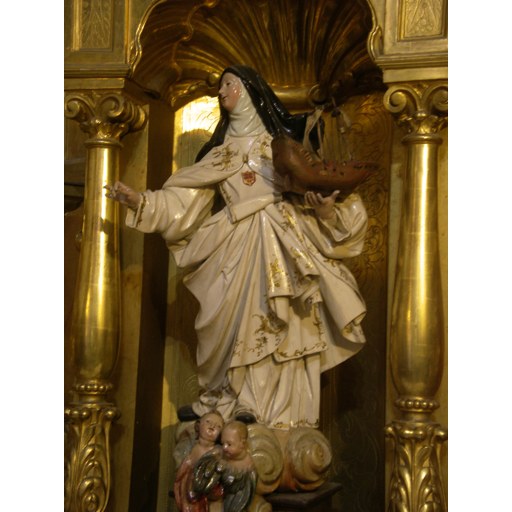
Bocachete
License: Public domain
María de Cervelló
Saint- Life Span
- 1230 - 1290 (age 60)
- Feast Day
- 19 September
- Gender
- female
- Church
- Catholic
Places
Roles & Family
Religious Information
Patronage
sailors;mariners;people in danger of shipwreck;Mercedarian sisters
Canonization
Biography
María de Cervelló, also known as Mary of Cervelló and popularly as Maria de Socos (Mary of Help), was a Catalan noblewoman and religious sister of the thirteenth century, associated with the Order of the Blessed Virgin Mary of Mercy (the Mercedarians). She was born in Barcelona, then in the Crown of Aragon, in 1230, into the distinguished Cervelló family. Barcelona in her lifetime was a major Mediterranean port and the seat of a recently founded military-religious order devoted to the ransom of Christian captives held in Muslim lands. The Mercedarian Order, established in the city in the early thirteenth century under Saint Peter Nolasco, shaped the religious atmosphere in which she grew up. Drawn from youth to a life of prayer and charity, she remained unmarried and eventually embraced a consecrated life in connection with that order rather than a dynastic marriage typical of her class.
In the middle decades of the thirteenth century she gathered other women who wished to share the Mercedarian spirit of mercy. Tradition holds that around 1265 she founded the first community of Mercedarian sisters in Barcelona, thereby originating the female branch of the Order of Mercy. The sisters devoted themselves to prayer, penance, and works of charity in support of the friars’ redemptive mission of ransoming captives. María became known for personal austerity, care of the poor and the sick, and steadfast support of that work. Contemporary and later accounts present her as a woman of the urban Catalan nobility who redirected family status and resources toward religious and charitable ends.
Later hagiography especially emphasizes her intercession on behalf of seafarers. Barcelona’s maritime economy made shipwreck and storm a constant danger, and María acquired the popular title Maria de Socos because the faithful credited her with appearing in times of peril at sea, calming storms, and bringing ships safely to port. These stories, whether strictly historical or later elaborations of her cult, explain why sailors of the Catalan coast invoked her as a patron. She died in Barcelona on 19 September 1290 and was buried in the Mercedarian church of the city, the present Basilica of La Mercè, where her memory remained tied to the order she had helped to extend among women.
Devotion to María de Cervelló continued in Barcelona and within the Mercedarian family after her death. Pope Innocent XII confirmed her cult in 1692, an act that secured her public veneration as a saint in the Catholic Church. Her feast is kept on 19 September. She is invoked as a patron of sailors and of those in danger of shipwreck, and she is regarded as foundress and patroness of the Mercedarian sisters. Historical documentation for many personal details of her life remains limited, as is common for thirteenth-century women religious; the outline of her noble Catalan origin, her role in establishing Mercedarian women in Barcelona, her death in 1290, and the later papal confirmation of her cult are the elements most consistently attested in reliable ecclesiastical and historical tradition.