María de la Purificación Vidal Pastor is a blessed of the Catholic Church.
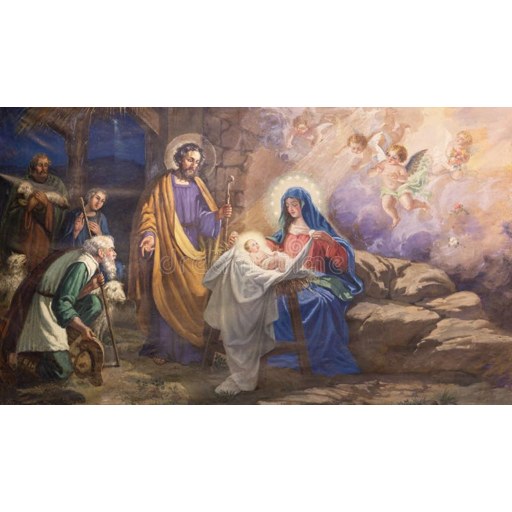
https://dreamstime.com/valencia-spain-february-painting-st-paul-apostle-church-iglesia-el-buen-pastor-miguel-vaguer-valencia-spain-february-image249278647
License: unknown
María de la Purificación Vidal Pastor
Blessed- Gender
- female
- Church
- Catholic
Places
Roles & Family
Biography
María de la Purificación Vidal Pastor appears in some databases as a historical person associated with Catholic religious life, yet she remains an obscure figure whose biography has not been established in standard scholarly or hagiographical literature. The compound given name María de la Purificación is characteristically Spanish and was frequently bestowed in honor of the liturgical feast of the Purification of the Blessed Virgin Mary. The surnames Vidal and Pastor likewise point toward the Iberian Peninsula, where both names have long been attested.
No baptismal register, civil birth record, or contemporary newspaper notice that would fix her year and place of birth has been cited in accessible reference works. Equally absent are verified notices of her death, burial, or any process of beatification or canonization conducted by the Holy See. In the absence of such documentation it is impossible to assign her to a particular religious order, to determine whether she lived as a consecrated religious or as a laywoman, or to know whether she ever married or had children.
Spanish Catholicism in the nineteenth and twentieth centuries produced a great many women who adopted or received the name Purificación and who devoted themselves to teaching, nursing, or contemplative prayer. Some of these women later became locally venerated; a smaller number were beatified as martyrs of the religious persecution that accompanied the Spanish Civil War. Nothing in the publicly available record, however, securely identifies María de la Purificación Vidal Pastor with any of those groups.
Researchers interested in her life would need to consult diocesan archives, convent necrologies, or family papers in Spain or in Spanish-speaking countries. Until such primary sources are located and critically examined, the principal facts of her existence—dates, places, vocation, and eventual reputation for holiness—must be regarded as unknown.
This caution is especially important in hagiographical work, where the temptation to fill gaps with conjecture has historically led to the circulation of pious but inaccurate legends. For the present, therefore, María de la Purificación Vidal Pastor stands as a name awaiting archival recovery rather than as a figure whose life can be narrated with confidence.