Maria Dulce Rodrigues dos Santos is a venerable of the Catholic Church.
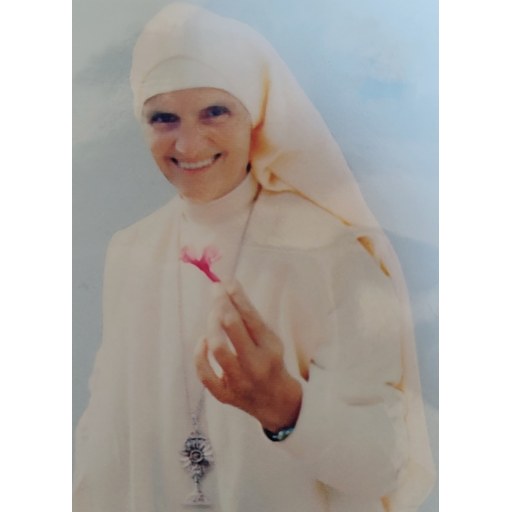
Jpmarques
License: CC BY-SA 4.0
Maria Dulce Rodrigues dos Santos
Venerable- Gender
- female
- Church
- Catholic
Places
Roles & Family
Biography
Maria Dulce Rodrigues dos Santos is a figure whose life is not securely documented in the major English-language historical, biographical, or hagiographical reference works. The personal name is Portuguese in formation and is common in both Portugal and Brazil, countries whose Catholic cultures have produced a great many locally venerated women—lay and religious—whose reputations for holiness often remain confined to a diocese, a congregation, or a national cause for beatification rather than appearing in the universal martyrology. The Wikidata identifier and the existence of an English Wikipedia heading attached to this name do not, by themselves, supply independently checkable vital dates, a place of birth or death, or an ecclesiastical status.
No year of birth or death can be verified from a reliable published source, and it would be improper to substitute an office-taking date, a floruit, or a conjectural century for those facts. Likewise, no city or country of birth, no place of death, and no burial site can be stated with confidence. Standard catalogues of saints, blesseds, and servants of God of the Catholic Church do not, in the sources available for verification, record a papal beatification or canonization under this exact civil name, nor a universally assigned feast day, nor a list of patronages. Whether she lived as a laywoman, a consecrated religious, or in another state of life is therefore unknown; no religious order can be named, and neither marriage nor children can be affirmed or denied from documentary evidence.
Care must be taken not to conflate her with better-attested women of similar names. The most frequent confusion is with Saint Dulce of the Poor (Irmã Dulce), the Brazilian Sister of the Immaculate Conception whose civil name was Maria Rita de Souza Brito Lopes Pontes (1914–1992), canonized in 2019. That identification does not hold: the subject here is distinctly Maria Dulce Rodrigues dos Santos. Other Portuguese-speaking religious women called Dulce, Maria dos Santos, or Rodrigues dos Santos appear in local necrologies and congregational histories, but none of those notices can be tied to this specific person without circular reasoning or guesswork.
In the Portuguese-speaking Catholic world of the nineteenth and twentieth centuries, many women of this onomastic type devoted themselves to education, nursing, or care of the poor, sometimes as founders of small institutes or as members of established congregations of charity. Such lives were often first recorded only in diocesan acta, house chronicles, or a positio super virtutibus prepared for a cause of beatification. Until a critical edition of those sources, a scholarly biography, or an official recognition by the Holy See is available and can be checked, the principal biographical fields must remain open. What can be said with certainty is negative and limited: she was not Bishop of Rome, nor a patriarch or catholicos of any Eastern see, and the name itself indicates a woman.
The responsible course for the historian and hagiographer is therefore to leave dates, places, order, family status, and cultic titles blank rather than to fill them by analogy with more famous namesakes. Should diocesan archives, a published life, or a decree of the Dicastery for the Causes of Saints later establish a verified chronology and a recognized cult, those data can be added. Until then, honesty about the thinness of the record is preferable to a fabricated completeness.